 how-to
7 Steps to Find Honest European Auto Repair
Last Updated: November 1, 2026
Quick Summary
To find honest european auto repair, verify that certifications are current but treat them as a starting filter rather than proof of good work, as the FTC's Auto Repair Basics guide notes. Then read reviews for repeated complaints, ask direct questions, compare written estimates line by line, and test the shop with a small job first.
- Ask for a written estimate before anyone touches the car, and confirm the final bill matches it.
- Sort reviews by newest first, since a shop can coast on old praise for years.
- Compare estimates line by line only after confirming both describe the same scope of work.
- Ask whether the diagnostic fee is separate from the repair or credited toward it.
- A shop that labels a Tier 3 item as urgent without a measurement is applying sales pressure.
Table of Contents
- How to Know if an Auto Repair Shop Is Reputable
- Questions to Ask an Auto Mechanic Before Repair
- European Car Dealership vs Independent Mechanic
- How to Compare Auto Repair Estimates Line by Line
- Step 1: Confirm both estimates describe the same job
- Step 2: Separate the diagnostic fee from the repair
- Step 3: Compare parts by specification, not by price
- Step 4: Check labor hours against the operation
- Step 5: Read the recommended-work section as a separate document
- Step 6: Look for the red flags that hide scope
- Step 7: Ask for the invoice format before you approve
- Verify Honesty Before You Hand Over the Keys
- Prioritize Urgent Repairs and Understand Warranty Terms
- Schedule Your First Visit to a European Auto Repair Specialist
- Frequently Asked Questions
How to Know if an Auto Repair Shop Is Reputable
Learning how to find honest european auto repair starts with one hard truth: a clean storefront and a wall of certificates prove less than you think.
The Federal Trade Commission's Auto Repair Basics guide puts it plainly. A current certification is worth checking, but certification alone does not prove good or honest work (Auto Repair Basics).
Here is the practical sequence we recommend:
- Confirm the shop works on your make regularly, not just occasionally
- Read reviews for repeated complaints, not the overall star score
- Ask for a written estimate before anyone touches the car
That last step matters most. A shop that handles a routine oil change or brake inspection well earns the bigger job later.
Check Certifications, Then Look Past Them
Certifications are a starting filter, not a finish line. Look for master-certified technicians and current credentials, then ask what those credentials actually cover.
The FTC's guidance is clear: verify that certifications are current, but don't treat them as proof of honest work.
Ask two follow-up questions:
- Which specific certifications do your technicians hold?
- How do you keep them current?
If you want the full method for checking credentials, see our guide on how to verify a master certified mechanic.
Read Reviews for Patterns, Not Star Counts
Star ratings alone tell you little. Patterns across reviews tell you more.
Scan for repetition. Several reviewers raising the same concern is a pattern; a single isolated complaint is less telling. Look for reviews describing the estimate process, the communication, and whether the final bill matched the quote.
Sort reviews by newest first. A shop can coast on old praise for years. Recent reviews show how it operates now.
Questions to Ask an Auto Mechanic Before Repair
The best time to judge a shop is before you authorize anything.
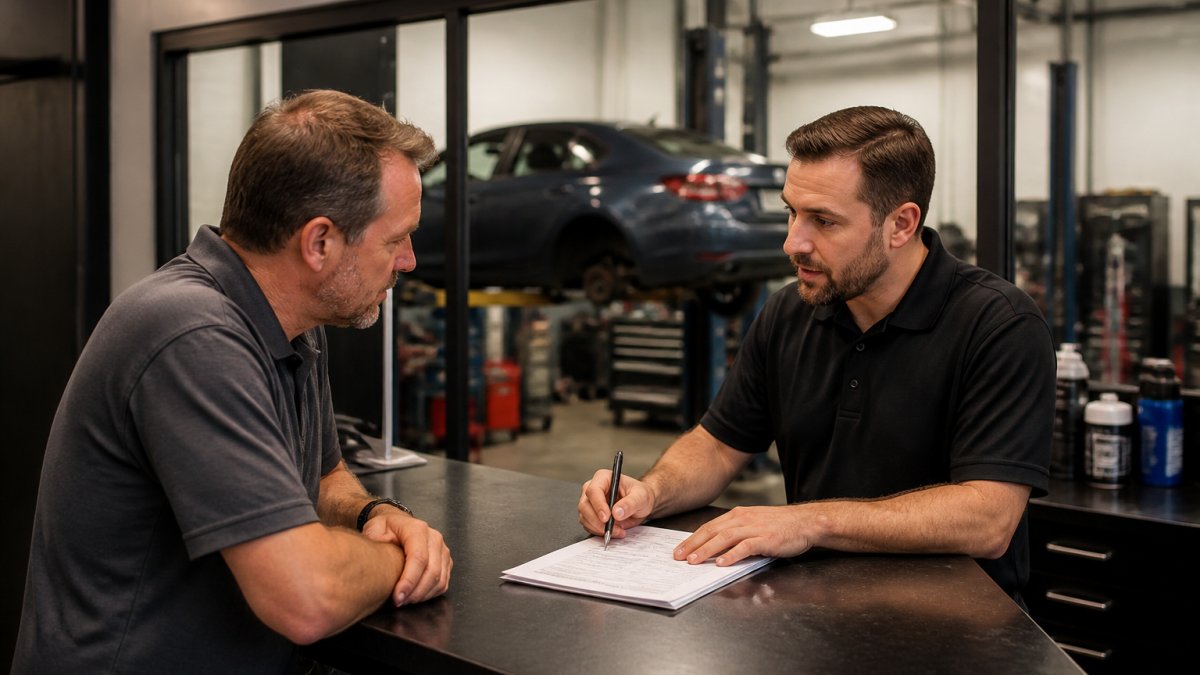
"Will I get a written estimate before work begins?" The answer should be an immediate yes.
"What does your warranty cover, and for how long?" Get specifics, not a vague promise.
"Who actually works on my car?" Ask about technician experience and specialized training.
A shop that dodges any of these is telling you something. Believe it.
European Car Dealership vs Independent Mechanic
Neither option wins by default. The right choice depends on your car, your warranty, and what you value.
Dealerships offer brand-specific training, but can cost more and sometimes feel pressure-driven on upsells. Independent shops may offer broader multi-make experience and more direct communication, depending on the shop.
Here's the honest split:
| Factor | Dealership | Independent European Shop |
|---|---|---|
| Diagnostic tools | Dealer-level equipment | Varies, ask directly |
| Cost structure | Usually higher | Often more flexible |
| Communication | Service advisor layers | Often direct with the tech |
| Upsell pressure | Can be high | Varies by shop |
| Multi-brand expertise | Single brand | Across all European makes |
For a full breakdown, read our comparison of dealership vs independent European auto repair. It covers warranty implications and when each path makes more sense.
How to Compare Auto Repair Estimates Line by Line
Two estimates for the same job can differ wildly, and the gap is usually in the details. Compare them line by line rather than by the bottom number.
Step 1: Confirm both estimates describe the same job
Before comparing a single number, check that both shops are quoting the same scope. One estimate may include a four-wheel alignment and a brake fluid flush while the other covers only pads and rotors; if scopes differ, the totals are not comparable. Ask each shop to state in writing what operation is performed and what is excluded.
Step 2: Separate the diagnostic fee from the repair
A diagnostic fee pays for testing and fault isolation; the repair estimate pays for the fix. Ask each shop three things:
- Is the diagnostic fee separate from the repair, or credited toward it if you approve the work?
- How many hours of diagnosis are included?
- Will you receive the test results, fault codes, measured values, and the reasoning, in writing?
A shop that will not put diagnostic findings in writing is asking you to trust a conclusion you cannot check.
Step 3: Compare parts by specification, not by price
For each parts line, identify the specification: OEM (original equipment manufacturer), OE-equivalent, aftermarket, or refurbished/remanufactured. Then compare like with like. An OEM control arm and a budget aftermarket control arm are not the same product, and the price difference reflects that. Ask whether the shop offers a choice and what warranty attaches to each option. On European vehicles, some parts carry a core charge, a refundable deposit returned when the old part is sent back, so confirm whether a core charge appears on the estimate and how it is refunded.
Step 4: Check labor hours against the operation
Labor should be quoted in hours for a defined operation, not as a lump sum. Ask whether the shop uses published labor time guides or its own estimates, and whether the labor line includes related operations (for example, removing a component to reach the part being replaced). A suspiciously low labor line often signals a shortcut or a hidden charge added later; a high one with no explanation deserves the same question.
Step 5: Read the recommended-work section as a separate document
Many estimates mix required repairs with recommended maintenance. Split them. For each recommended item, ask: What symptom or measurement triggered this? What happens if I defer it? Is it required for the quoted repair, or optional? Honest shops answer without pressure. If a recommendation cannot be tied to a measurement or stated symptom, treat it as optional until proven otherwise.
Step 6: Look for the red flags that hide scope
Check for these patterns on either estimate:
- Vague line items like "misc. shop supplies" or "shop fee" with no percentage or cap stated
- Repairs bundled together with no explanation of why they belong together
- Recommended work with no stated reason or measurement
Step 7: Ask for the invoice format before you approve
Ask each shop to show you a sample itemized invoice listing parts by description and specification, labor by operation and hours, diagnostic charges, taxes, and any fees. If the estimate and invoice use the same format, you can compare the final bill to the quote directly. If they do not, you have found a shop that does not want that comparison made.
Want a sharper eye for upsells? Our guide on avoiding unnecessary upsells at auto shops breaks down the seven steps we'd use ourselves.
Verify Honesty Before You Hand Over the Keys
You can test a shop's honesty with a low-stakes job before trusting it with anything major.
Consider booking a routine service first, such as an oil change or preventative maintenance visit, to see how any shop operates. Watch for three things:
- Did the final bill match the written estimate?
- Did anyone try to add work you didn't ask about?
- Did they explain what they found in plain language?
A shop that handles a small job well may be worth trusting with a larger one.
Second opinions are fair game too. If a diagnosis feels off, consider an independent inspection elsewhere. Reputable shops typically accept that request.
Prioritize Urgent Repairs and Understand Warranty Terms
Not every recommended repair needs to happen today. Sorting them helps protect both your safety and your budget. Sort every recommendation into a priority tier before you approve anything.
Tier 1: Stop driving until repaired
These are safety or catastrophic-failure risks. If a shop identifies one of these, the repair is not optional and deferral is not a budget decision:
- Brake problems, including a soft or spongy pedal, grinding, pulling to one side under braking, or a pedal that sinks toward the floor
- Steering and suspension faults that affect control, such as excessive play, clunking over bumps with wandering, or a broken component
- Cooling system leaks or overheating, which can warp a cylinder head and turn a hose replacement into an engine job
Tier 2: Schedule within a defined window
These are not immediate emergencies, but they worsen with time and can become Tier 1 if ignored. Ask the shop for a mileage or time window, not a vague "soon":
- Worn brake pads that have not reached the wear indicator
- Minor fluid seeps that are not yet dripping
- Worn belts or hoses showing early cracking
Tier 3: Monitor and defer
These can wait, with monitoring:
- Minor cosmetic wear
- Non-critical fluid seeps that are not reaching the ground
- Scheduled maintenance that is slightly due
What to check in a written warranty
Warranty terms deserve the same scrutiny as the estimate. Ask what is covered, how long coverage lasts, and what voids it. Get it in writing before you approve the work. In particular, confirm:
- Parts coverage: Which parts are covered, for how long, and whether the coverage is the parts manufacturer's warranty or the shop's own.
- Labor coverage: Whether labor to replace a failed part is covered, or only the part itself. A parts-only warranty can still leave you paying for the same job twice.
- Exclusions: Wear items (pads, rotors, belts, filters, fluids), consumables, and damage from outside causes are commonly excluded. Ask for the list in writing.
Ask for these terms on paper or in the estimate packet before work begins. A verbal "we stand behind our work" is not a warranty term you can enforce. Our guide on what an automotive repair warranty covers explains the fine print to check.
At Euro Specialist, all work is backed by a warranty.
Schedule Your First Visit to a European Auto Repair Specialist
Finding honest european auto repair comes down to process, not luck. Check credentials, read for patterns, ask direct questions, compare estimates line by line, and test with a small job first.
Euro Specialist is family-owned, and our master-certified technicians work across all European makes. When you're ready to put the process to work, schedule your appointment and see the difference for yourself.
Frequently Asked Questions
How do I know if an auto repair shop is reputable?
Start with current certifications and confirm them directly with the issuing organization, since the FTC warns that certification alone does not prove honest work. Then read customer reviews for repeated themes, such as clear communication or surprise charges, rather than just the star rating. Ask whether the shop specializes in your vehicle make, request a written estimate before work begins, and confirm the warranty terms in writing. A shop that answers these questions plainly and puts everything on paper is usually the safer choice.
What questions should I ask a European auto repair shop before booking?
Ask what diagnostic equipment they use for your make, whether their technicians hold current master certifications, and how they handle a repair that does not fix the problem. Request a written, itemized estimate covering parts and labor before approving anything. Ask what the warranty covers and for how long, and whether the shop will show you the failed part after replacement. For European vehicles, also ask how often they service your specific brand.
Should I take my European car to a dealership or an independent repair shop?
Dealerships have brand-specific training and equipment, but independent shops vary in their tools, rates and communication, so compare them directly. The right choice depends on the shop, not the category. Verify certifications, ask about diagnostic tools, and compare written estimates. Many owners of out-of-warranty European cars choose a specialist independent shop for scheduled maintenance and routine repairs, keeping the dealership for warranty work or software updates that require factory access.
How do I compare auto repair estimates from different shops?
Put the estimates side by side and compare three things: the diagnosis, the parts, and the labor. Confirm each shop identified the same problem, check whether parts are OEM or aftermarket, and compare labor hours rather than just the total. Ask each shop to explain any line you do not understand. An estimate that skips diagnostic testing or uses vague part descriptions deserves closer questions, so favor the estimate that is specific, itemized, and willing to put the diagnosis in writing.
Your European car deserves a shop that explains the why before the what. Euro Specialist brings master-certified technicians, expertise across all European makes, and a warranty on every job, all with a family-owned approach to honest service. Get started with Euro Specialist and schedule your appointment today.