 comparison
Dealership vs Independent European Auto Repair
Table of Contents
- Dealership vs Independent European Auto Repair: Side-by-Side Comparison
- Cost Breakdown: Labor Rates, Parts Markup, and What You Actually Pay
- European Auto Repair Diagnostic Tools: Why Equipment Access Decides the Job
- Does Independent Repair Void Car Warranty? What Federal Law Actually Says
- How to Verify Master Certified Mechanic Credentials Before You Hand Over the Keys
- OEM Parts vs Aftermarket Components: What Goes Into Your European Vehicle
- Maintenance vs Repair: Which Jobs Belong at the Dealer and Which Don't
- Frequently Asked Questions
Last Updated: September 28, 2026
Dealership vs Independent European Auto Repair: Side-by-Side Comparison
Dealership vs independent European auto repair comes down to one trade-off: the dealer holds proprietary software and warranty authority, while a good independent shop offers lower labor rates, direct technician access, and more flexible scheduling. For BMW, Audi, Mercedes-Benz, and Porsche owners, the right answer often depends on the job. This guide from Euro Specialist breaks down cost, diagnostics, warranty law, and parts.
| Factor | Dealership | Independent European Shop |
|---|---|---|
| Labor rate | Highest in market | Typically lower |
| Diagnostic software | Full factory access | Varies by shop |
| Parts | OEM only | OEM or equivalent |
| Warranty work | Handled in-house | Referred to dealer |
| Scheduling | Often multi-day wait | Usually faster |
| Best for | Warranty and software campaigns | Out-of-warranty maintenance and repair |
Cost Breakdown: Labor Rates, Parts Markup, and What You Actually Pay
Labor is where the two models diverge most. Dealerships charge the highest hourly rates in any market and bill by the manufacturer's book time, not actual time. Independent shops set their own rates, and a European specialist with the right tools can often complete the same job in less billed time.
European Auto Repair Diagnostic Tools: Why Equipment Access Decides the Job
Modern European vehicles are rolling computer networks. A BMW, Audi, Mercedes-Benz, or Porsche can run dozens of control modules across multiple data buses, CAN, FlexRay, and in newer platforms automotive Ethernet, and factory diagnostic software lets a technician read fault codes, run guided test plans, perform bidirectional actuation tests, and code or adapt new components. The common platforms are ODIS for Volkswagen Group (Audi, VW, Porsche), ISTA for BMW and Mini, XENTRY for Mercedes-Benz, and PIWIS for Porsche.
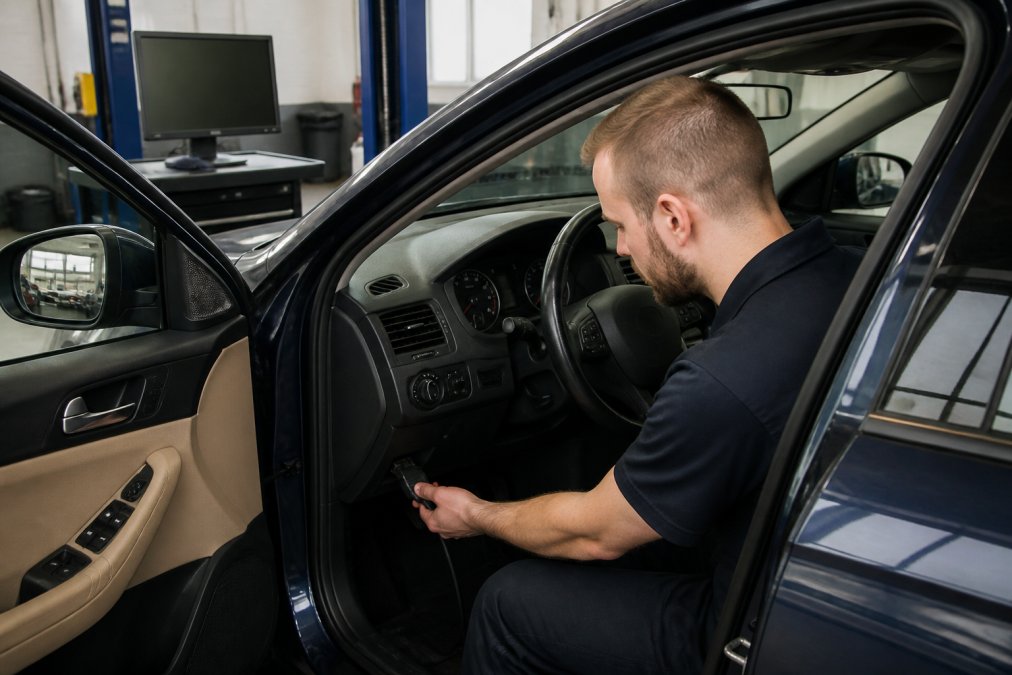
- Subscription tier. Some shops buy only the read-and-clear-fault-codes level. Others pay for the full programming and module-coding tier, which is what you need for battery registration, injector coding, transmission adaptation resets, and retrofits.
- Interface hardware. A generic OBD-II dongle won't do guided diagnostics on a late-model BMW or Audi. The shop needs a manufacturer-compliant pass-through device, and those are a real capital expense.
- Software currency. Factory software updates constantly. A shop that let its subscription lapse six months ago may be working from outdated test plans on a platform that has since changed.
- In-house vs. remote programming. Some independents handle module programming on-site; others use a remote programming service that logs in and does it for them. Both can work, but the remote route adds turnaround time.
Does Independent Repair Void Car Warranty? What Federal Law Actually Says
No. Independent repair does not void your new-car warranty, and this is settled law, not opinion. The Magnuson-Moss Warranty Act prohibits a manufacturer from voiding your warranty simply because someone other than the dealer performed maintenance or repairs. The manufacturer can only deny a specific warranty claim if it can prove the aftermarket part or the independent work caused the failure.
How to Verify Master Certified Mechanic Credentials Before You Hand Over the Keys
"Master certified" means a technician has passed the highest tier of a recognized certification program, typically ASE master status plus manufacturer-specific training. It is a real credential with a paper trail, and any shop claiming it should prove it on request.
Here's how to verify before you commit:
- Ask for the technician's ASE certification number and check it against the ASE certified professional lookup
- Ask which manufacturer training programs the shop participates in, and for how long
- Request the name of the specific technician who will work on your car
- Ask how the shop handles a diagnosis it cannot solve, and whether it refers out or keeps guessing
- Confirm the shop's own work warranty in writing before authorizing repairs
OEM Parts vs Aftermarket Components: What Goes Into Your European Vehicle
OEM parts are manufactured to the vehicle maker's specification and sold under its brand. Aftermarket components are made by third parties, with quality ranging from excellent to poor depending on the manufacturer and application.
| Component | OEM Recommended | Quality Aftermarket Acceptable |
|---|---|---|
| Control modules and sensors | Yes | Rarely |
| Brake pads and rotors | Optional | Yes, if spec-matched |
| Filters and fluids | Optional | Yes, if spec-matched |
| Suspension components | Case by case | Often yes |
Maintenance vs Repair: Which Jobs Belong at the Dealer and Which Don't
The most useful distinction for a European car owner is the one most comparison articles skip: maintenance and repair are not the same job, and they carry different warranty, cost, and expertise implications.
Here's the practical split:
- Warranty work and manufacturer software campaigns belong at the dealer. If your vehicle is under a factory warranty and the repair is covered, the dealer handles it at no cost to you, and there is no reason to pay an independent shop for the same job. Recall and service-campaign work is the same story.
- Routine maintenance is fair game anywhere that uses the correct fluids and spec-matched parts and documents the work. Many owners use an independent for this specifically because it's faster and cheaper.
- Out-of-warranty repair and complex diagnostics are where a good independent European specialist earns its keep, often with the same factory software the dealer uses, at a lower labor rate and with direct access to the technician doing the work.
- Pre-purchase inspections are almost always better at an independent. A dealer has an incentive to sell you the car; an independent inspector does not.
Extended warranty and insurance claims: the part nobody explains
This is where most guides stop, and where owners get burned. If you bought a third-party extended warranty (a vehicle service contract), the rules are set by the contract, not federal law, and they vary widely.
A few patterns worth knowing before you authorize work:
- Pre-authorization is almost always required. The administrator typically wants a diagnosis, a written estimate, and sometimes photos or a teardown before it approves a claim. If you authorize repairs first and ask questions later, you may be paying out of pocket.
- Some contracts restrict where you can go. Read the "repair facilities" section. Many allow any licensed shop; some steer you to a network; a few require dealer service for certain repairs. Know which one you signed.
- Diagnostic time is often the sticking point. Many administrators cover the repair but balk at paying the full diagnostic hour, or they cap it. Ask the shop up front how it handles that gap so there's no surprise on the invoice.
- OEM vs. aftermarket parts clauses. Some contracts specify OEM parts; others allow aftermarket equivalents. If yours says OEM, tell the shop before they order.
- The shop has to be willing to work with the administrator. Not every independent wants to spend an hour on the phone with a claims adjuster. Ask before you book.
Frequently Asked Questions
Are dealerships better for European car repairs?
Not automatically. Dealerships have factory-trained technicians and proprietary software, but independent European auto repair shops with the same diagnostic equipment often deliver identical outcomes at lower labor rates. The deciding factors are whether the shop has make-specific scan tools, master-certified technicians, and a written warranty. For routine maintenance and out-of-warranty repairs, a qualified independent shop is usually the better value.
Does using an independent shop void my vehicle warranty?
No. The Magnuson-Moss Warranty Act prevents manufacturers from voiding your warranty simply because an independent shop performed the work. The dealer must prove the aftermarket part or incorrect service caused the failure. Keep every receipt and confirm the shop uses OEM or equivalent-quality parts that meet the manufacturer's specification. Documented service history protects you if a warranty claim is ever questioned.
How do I verify a master certified mechanic?
Ask for the technician's certification number and check it against the issuing body's public registry. Master certification typically requires years of hands-on experience plus passing multiple ASE or manufacturer-specific exams. A legitimate shop will show you certificates, list technician names on its website, and let you speak with the tech working on your car. If a shop dodges the question, that tells you something.
Are European cars more expensive to repair at independent shops?
Independent European auto repair is generally less expensive than dealership service, mainly because labor rates run lower and shops source OEM-equivalent parts at better prices. The gap narrows on jobs that require proprietary software access or manufacturer-funded recall work. For out-of-warranty maintenance like oil services, brakes, and suspension, independents typically save drivers a meaningful amount without sacrificing parts quality.
What are the benefits of choosing a specialist for European auto repair?
A European vehicle specialist carries the same diagnostic platforms the dealer uses, knows the common failure points across BMW, Audi, Mercedes, and Porsche platforms, and stocks or can quickly source OEM parts. That combination shortens turnaround time and reduces the guesswork that general shops run into with complex electronics. You also get a service advisor who can explain tradeoffs instead of reading from a script.