 how-to
How to Find an Honest European Car Mechanic
Table of Contents
- Step 1: Verify Master Certified Technician Credentials
- Step 2: Research Repair Shop Ratings and Customer Feedback
- Step 3: Ask the Right Questions Before Authorizing Repairs
- Step 4: Evaluate Independent Shops vs. Dealership Repair Costs
- Step 5: Spot Red Flags During Your First Contact
- Step 6: Request a Written Estimate and Understand Warranty Coverage
- Step 7: Establish an Escalation Path for Disputes
- Frequently Asked Questions
Last Updated: October 2, 2026
Step 1: Verify Master Certified Technician Credentials
Finding an honest European car mechanic starts with verifying credentials. The best shops employ master-certified technicians with proven expertise across European vehicle makes.
Check ASE Certification Status
ASE (Automotive Service Excellence) certification is the gold standard in the industry. A master-certified technician has passed eight different ASE exams and maintained their certification through ongoing education. You can verify any technician's ASE status directly on the ASE certification verification tool.
When you call, ask: "Do you have master-certified technicians on staff?" Reputable shops will confirm and provide technician names and certification numbers. Hesitation is a red flag.
Confirm Factory-Trained Credentials
European manufacturers like BMW, Mercedes-Benz, Audi, and Volkswagen offer factory training programs. Factory-trained technicians study your vehicle's specific systems directly from the manufacturer, which matters because European cars use different electrical architectures and diagnostic protocols than domestic vehicles.
Ask whether technicians have completed manufacturer-specific training. Factory-trained technicians troubleshoot electrical issues that generalist mechanics often miss.
Step 2: Research Repair Shop Ratings and Customer Feedback
Customer reviews reveal what a shop actually delivers. One five-star review means little; twenty consistent five-star reviews from verified customers means everything.
Where to Find Verified Reviews
Start with Google Business reviews, the hardest to fake because Google verifies visits. Look for 4.5+ stars with 30+ reviews. Read recent reviews first; old ones don't reflect current operations.
Check Better Business Bureau ratings for complaint history and how shops respond to issues. A shop that addresses complaints professionally shows integrity. Yelp reviews add another data point, though they're easier to manipulate than Google reviews.
Look for reviews mentioning European vehicles and complex repairs. You want evidence they handle your specific problem.
Red Flags in Customer Feedback
Watch for patterns in negative reviews. One pricing complaint is normal; five surprise-charge complaints suggest a real problem. Red flags include: "Charged me for work that wasn't done," "Found problems other shops said weren't real," "Wouldn't explain what was wrong," or "Pressured me to authorize expensive repairs." Repeated complaints about the same issue disqualify a shop.
Notice how the shop owner responds. Defensive responses suggest they don't take concerns seriously.
Step 3: Ask the Right Questions Before Authorizing Repairs
The questions you ask before work begins determine whether you'll understand the bill afterward.
Diagnostic Process and Digital Transparency
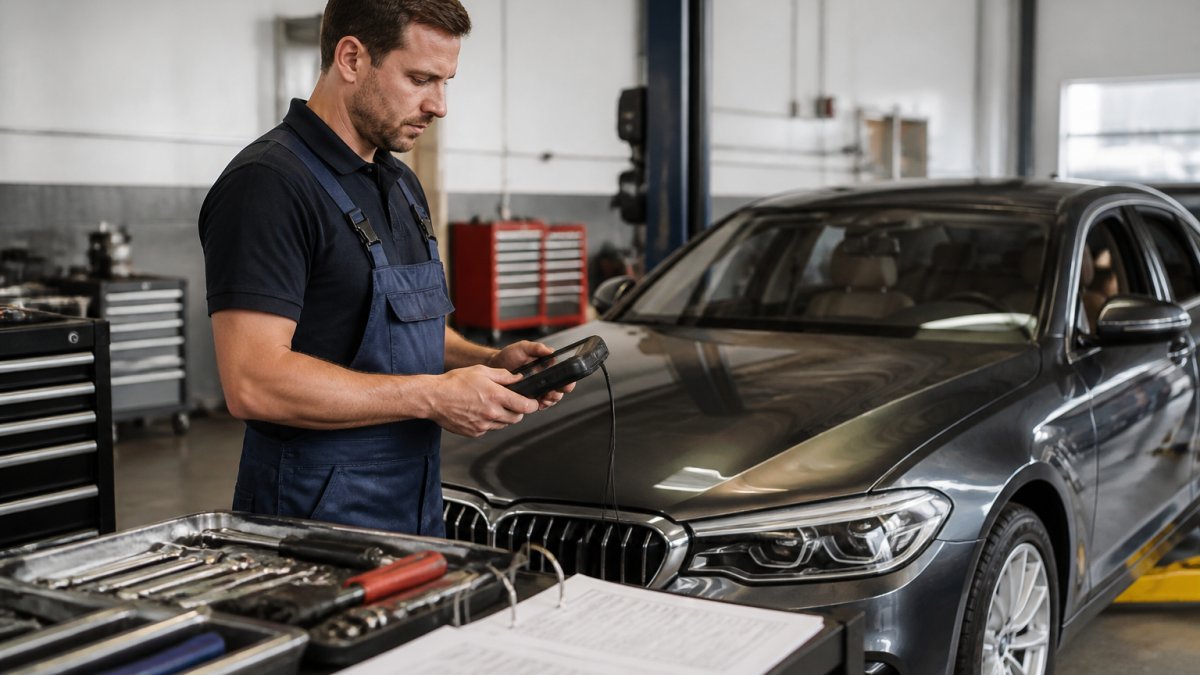
Before any repair, a shop should perform a diagnostic scan, non-negotiable for European vehicles. Ask: "What diagnostic equipment will you use?" European cars require specialized scanners for manufacturer-specific fault codes.
Request a written diagnostic report listing fault codes, their meanings, and causes. A shop refusing this is hiding something.
Modern honest shops provide digital inspection transparency: photos or video of failed components, digital diagnostic screenshots showing fault codes on the scanner screen, a digital work log timestamping each inspection step, and before-and-after photos of visible repair work. This prevents disputes and proves work was completed.
Ask directly: "Do you provide digital photos and diagnostic screenshots with your estimate?" Shops hesitating or offering only written reports operate on older standards.
Ask whether the diagnostic fee applies toward repair costs. Honest shops credit it against labor; shops charging full diagnostic fees plus full labor are double-dipping.
Parts, Labor, and Warranty Details
Get a written estimate specifying part names and sources (OEM or aftermarket), labor hours and rate, total cost, and warranty coverage on parts and labor.
Ask whether they use OEM (original equipment manufacturer) or aftermarket parts. OEM parts carry manufacturer backing; aftermarket costs less but may not fit as precisely. For European vehicles, OEM parts usually make sense due to tight engineering tolerances.
Get clarity on warranty. Reputable shops warrant work for at least 12 months or 12,000 miles.
Step 4: Evaluate Independent Shops vs. Dealership Repair Costs
This decision shapes your long-term maintenance costs and service experience. Both have genuine advantages depending on your situation.
Cost Structure Differences
Independent shops typically charge 30-50% less per labor hour than dealerships, a $500 difference on a 10-hour repair.
Dealerships often complete work faster because technicians specialize in one brand.
Dealerships charge list price for OEM parts; independent shops buy at wholesale and pass savings to you.
When Dealership Service Makes Sense
Choose a dealership if your vehicle is under warranty, dealership service maintains coverage. Read your warranty documentation carefully.
Consider dealerships for recalls and software updates; they receive these directly from manufacturers.
For complex electrical issues on newer European vehicles, dealerships have the newest diagnostic software.
For routine maintenance, independent shops deliver the same quality at better prices.
| Repair Type | Best Choice | Reason |
|---|---|---|
| Warranty work | Dealership | Maintains coverage |
| Recalls & updates | Dealership | Direct manufacturer access |
| Electrical diagnostics | Dealership or specialist independent | Newest diagnostic software |
| Routine maintenance | Independent shop | 30-50% cost savings |
| Complex mechanical work | Specialist independent | Expertise + savings |
Step 5: Spot Red Flags During Your First Contact
Your first phone call reveals a lot. Honest shops are transparent; dishonest shops hide information and pressure you.
Phone Screening Script: Questions to Ask Before You Visit
Call the shop before visiting. How they answer filters out dishonest operators.
Opening question: "I have a [year/make/model] with [specific symptom]. Have you worked on this issue before?" Honest shops ask follow-up questions; dishonest shops jump to "bring it in" or quote prices without details.
Diagnostic process: Ask about their process, diagnostic fee (does it apply toward repairs?), and whether they provide photos and screenshots. Honest shops explain step-by-step and credit fees against labor. Shops saying "diagnostic fee is non-refundable" signal they don't want transparency.
Certification and expertise: Ask if they have master-certified technicians specializing in European vehicles and factory training on your brand. Confident shops confirm immediately; hesitation suggests lacking credentials.
Estimate and timeline: Ask how long before you receive a written estimate and if you can take time for a second opinion. Honest shops give 24-48 hours; pressure to decide immediately signals dishonesty.
Red flags during the phone call: Won't answer basic questions, quote prices without seeing the car, pressure immediate drop-off, won't explain diagnostic process, dismiss concerns, refuse digital documentation, or claim diagnostic fees are non-refundable and separate from repair costs.
An honest shop asks questions: What symptoms are you seeing? When did it start? What other shops have looked at it? They gather information before giving advice. If they immediately jump to "bring it in," they're not confident in phone diagnosis. That's fine, most issues require hands-on inspection. But they should explain why they need to see it and commit to transparency once they do.
Warning Signs at the Shop
When you visit, notice the environment. A clean, organized shop signals professionalism. Dirt, clutter, and disorganized work bays suggest sloppy practices.
Watch how technicians interact with you. Do they explain what they're doing? Do they answer questions or brush you off?
Red flags during your visit:
- They won't let you see the vehicle or diagnostic results
- They recommend expensive repairs without explaining why
- They pressure you to decide immediately
- They criticize previous repair work without evidence
- They won't provide a written estimate
- They refuse to email you photos or diagnostic screenshots
Step 6: Request a Written Estimate and Understand Warranty Coverage
A written estimate is your protection. It documents exactly what you're paying for and what you're getting in return.
The estimate should include:
- Vehicle identification (year, make, model, VIN)
- Specific problem description
- Recommended repairs with part names
- Labor hours and hourly rate
- Parts costs broken down
- Total estimated cost
- Warranty terms for parts and labor
- Timeline for completion
Step 7: Establish an Escalation Path for Disputes
Even with an honest shop, disagreements happen. Know how to resolve them before they become problems.
Frequently Asked Questions
What certifications should a European car mechanic have?
Look for ASE (Automotive Service Excellence) certification, which validates technical knowledge across multiple specialties. For European vehicles specifically, seek technicians with factory-trained credentials from BMW, Audi, Mercedes-Benz, or Porsche. Master-certified technicians hold ASE certification in at least eight different areas. Verify credentials directly through the ASE website or the manufacturer's technician database rather than relying solely on shop claims.
How do I verify a mechanic is actually master-certified?
Request the technician's ASE card and verify it through the official ASE website. Ask the shop for documentation of factory training from the vehicle manufacturer. Check if the shop holds accreditation from the Better Business Bureau or similar organizations. A legitimate shop will provide this information without hesitation. Avoid shops that claim certifications but cannot produce proof or get defensive when asked.
What questions should I ask a mechanic before authorizing repairs?
Ask how they diagnosed the problem, what equipment they used, what parts they recommend (OEM vs. aftermarket), labor costs, warranty coverage on parts and labor, and how long repairs will take. Request a written estimate before work begins. Ask about their process for contacting you if additional issues arise during service. Inquire whether they stand behind their work with a warranty and what that covers.
Is it cheaper to use an independent shop or a dealership for European car repairs?
Independent shops typically charge lower labor rates than dealerships, sometimes 30-50% less per hour. However, dealerships may have better pricing on OEM parts and offer manufacturer-backed warranty coverage. For routine maintenance and common repairs, independent specialists often provide better value. For warranty work or complex recalls, dealerships may be necessary. Get written estimates from both before deciding.