 how-to
Avoiding Unnecessary Upsells at Auto Shops: 7 Steps
Table of Contents
- Why Auto Shop Upsells Happen (and How to Spot the Pressure)
- Step 1: Learn How to Read an Auto Repair Estimate Line by Line
- Step 2: Questions to Ask a Mechanic Before Approving Repairs
- Step 3: Check the Evidence Against Your Owner's Manual Maintenance Schedule
- Step 4: How to Decline Recommended Car Repairs Without Causing Trouble
- Step 5: How to Get a Second Opinion on Car Repairs
- Step 6: Sort Recommendations by Safety and Urgency Before You Spend
- Step 7: What to Do After You Spot an Unnecessary Charge
- Frequently Asked Questions
Last Updated: October 20, 2026
Why Auto Shop Upsells Happen (and How to Spot the Pressure)
Most drivers hear "you need this today" and freeze. That moment is exactly when avoiding unnecessary upsells at auto shops gets hard, because the pressure is built into how service counters operate. At Euro Specialist, we see the other side of that counter every day, and the pattern is predictable: a service advisor is often paid partly on what they sell, so a $40 cabin air filter can quietly become a $400 package.
The tell is urgency with no evidence. Honest shops explain what they found and let you decide. Pressure tactics sound different:
- "It's a safety issue" with no photo or measurement
- A "limited-time discount" that expires today
- Bundled services you never asked about
The Difference Between a Real Upsell and Honest Preventive Maintenance
A real upsell sells work your car does not need yet. Honest preventive maintenance follows your owner's manual and shows you why. The NHTSA vehicle safety resources are a good starting point for understanding what counts as a safety concern versus routine wear.
Ask one question: "Can you show me?" If the answer is a shrug, you have your answer.
Step 1: Learn How to Read an Auto Repair Estimate Line by Line
An auto repair estimate is a written, itemized list of parts, labor, and fees for a specific job. Every line should tell you three things: what part, how many hours of labor, and what it costs.
Here is what to check:
- Parts: Is it OEM, aftermarket, or rebuilt? Ask for the part number.
- Labor: Hours times rate. A brake job on one axle is usually a set number of hours.
- Fees: Shop supplies, disposal, and diagnostic charges should be listed, not lumped in.
Labor, Parts, and Fees: What Each Line Should Tell You
Labor should be quoted in hours, not a flat mystery number. Parts should name the brand. Fees should be small and specific. If a line just says "miscellaneous," ask what it covers. A written estimate protects you, and it is the single best tool for avoiding unnecessary upsells at auto shops.
Step 2: Questions to Ask a Mechanic Before Approving Repairs
The best defense is a short list of questions. Ask them calmly, and watch how the advisor responds. A good shop welcomes them.

Use these questions to ask a mechanic before approving repairs:
- What did you find, and can I see it?
- Is this a safety issue, a performance issue, or maintenance?
- What happens if I wait three months?
- Is this in my owner's manual schedule?
- Can you show me photos of the worn part?
- What is the total, out the door, in writing?
If any answer is vague, do not approve the work yet. A confident technician can explain the "why" in plain language.
A Practical Script for the Service Counter
Knowing the questions is half the battle; delivering them without friction is the other half.
Opening: "Thanks for the estimate.
For a fluid or maintenance service: "Is this listed in my owner's manual at this mileage?
Polite refusal: "I appreciate you flagging that.
Closing: "Can you email or print the itemized estimate with the total out the door?
This script works because it is not confrontational.
What Evidence to Ask For, by Recommendation Type
Different recommendations call for different proof. Asking for the right evidence keeps the conversation focused and fair.
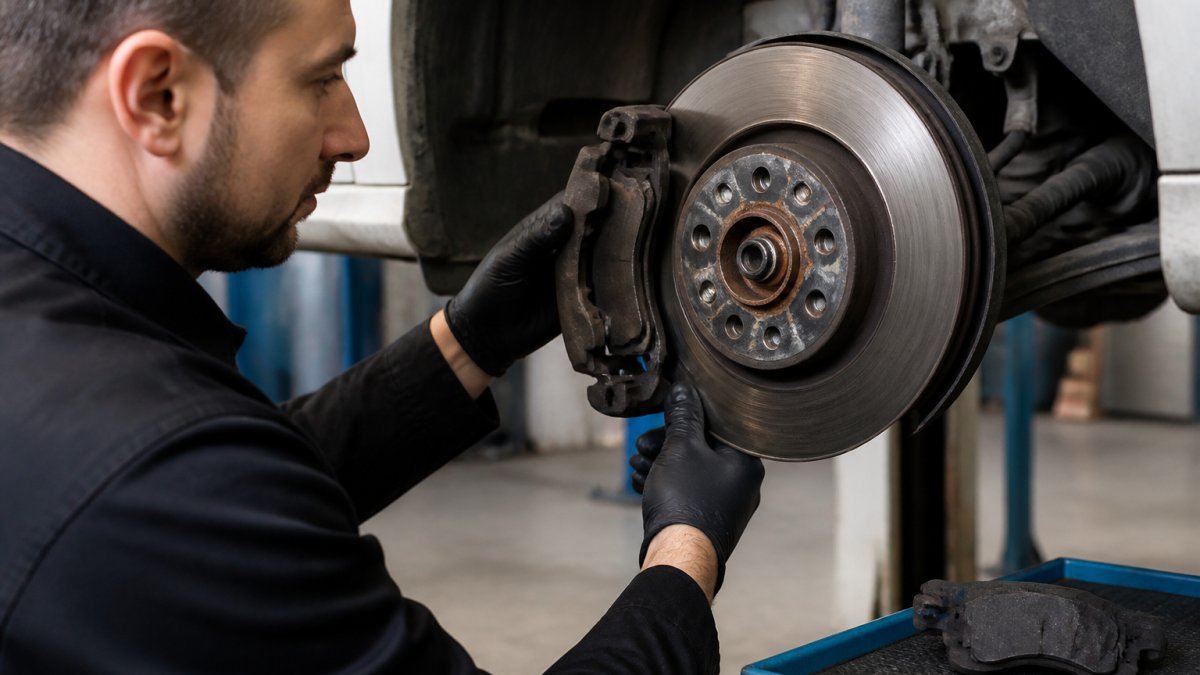
- Brakes: Ask for pad thickness measurements in millimeters and rotor thickness compared to the manufacturer's minimum. A photo of the pad next to a ruler is reasonable.
- Tires: Ask for tread depth readings in 32nds of an inch and the location of any wear. A tread depth gauge reading is quick and objective.
- Filters (cabin, engine, fuel): Ask to see the old filter. Cabin and engine air filters are visual; a photo of a clogged filter is easy to provide.
If a shop cannot or will not provide this kind of evidence for a recommendation, that is useful information. You are not accusing anyone of dishonesty; you are asking for the same documentation a careful technician would want before spending your money.
Step 3: Check the Evidence Against Your Owner's Manual Maintenance Schedule
Your owner's manual is the reference point. It lists service intervals by mileage and time, and it is written by the people who built the car.
A few rules of thumb:
- If the manual says 60,000 miles and you are at 30,000, ask why.
- Severe-service schedules exist for harsh driving, but they are still written down.
- "It's due" means nothing without a mileage or date reference.
Checking the manual takes two minutes and settles most arguments. It is also the fairest way to judge a recommendation, because the standard is not the advisor's opinion. It is the manufacturer's own guidance.
Step 4: How to Decline Recommended Car Repairs Without Causing Trouble
You can say no politely. "I'll hold off on that today, but please note it on my invoice" is enough. A professional shop accepts it.
Here is how to decline recommended car repairs cleanly:
- Ask them to write the declined item on the invoice.
- Ask whether it is urgent or can wait until your next visit.
- Get the recommendation in writing so you can research it later.
- Never argue. Just decline and move on.
Declining is not rude. It is your right, and a shop that pressures you after a clear "no" has told you something useful about how it operates. Keep your service records either way.
Step 5: How to Get a Second Opinion on Car Repairs
A second opinion is simple: take the written estimate to another shop and ask them to check the diagnosis. Most will do a quick inspection for a small fee, and many will confirm or correct the first shop's finding.
How to get a second opinion on car repairs without drama:
- Bring the written estimate, not just a verbal description.
- Ask the second shop to inspect the specific part, not the whole car.
- Compare both written findings side by side.
- Look for agreement on the diagnosis, not just the price.
If two shops disagree, the photos and measurements decide it. European models sometimes need a specialist who knows the platform, which is why we focus only on those makes.
Step 6: Sort Recommendations by Safety and Urgency Before You Spend
Not every item is equal. Sort the list into three buckets before you open your wallet.
| Priority | Examples | What to do |
|---|---|---|
| Urgent (safety) | Worn brake pads, bald tires, steering play | Fix now |
| Soon (within months) | Worn belts, weak battery, seeping coolant | Schedule it |
| Optional | Cosmetic items, early fluid changes | Decline or defer |
Brake work and tire replacement belong at the top. A cabin air filter or an early fluid flush can usually wait. This sorting habit alone prevents most surprise charges, and it keeps your budget pointed at what actually matters.
A Simple Urgent-Soon-Monitor Framework
A three-bucket sort is a start, but a clearer framework helps you decide under pressure. Use three questions for each recommended item:
- Does it affect control or stopping? Brakes, tires, steering, suspension components that affect alignment or handling. If yes, treat as urgent until proven otherwise.
- Does it affect the ability to see or be seen? Wipers, lights, mirrors. These are safety items and usually inexpensive; do them now.
- Is there a measurable failure threshold? Pad thickness, tread depth, battery CCA, fluid test results. If the measurement is at or past the manufacturer's limit, it is urgent or soon depending on the margin.
If the answer to all three is no, the item is likely monitor-or-defer. That does not mean ignore it; it means schedule it and recheck at the next service.
Applying the Framework to Common Recommendations
- Brake pads at or below 3/32 inch (about 2-3 mm): Urgent. Replace now. Above that, ask for the measurement and plan accordingly.
- Tires at 4/32 inch or less: Plan replacement soon; at 2/32 inch they are legally worn out in most states and unsafe in wet conditions. Urgent.
- Battery testing below the rated CCA by a significant margin: Soon. A weak battery may fail in cold weather; schedule a replacement before it leaves you stranded.
- Serpentine belt with visible cracks or glazing: Soon. A failed belt can leave you without power steering or charging; replace at the next service.
When "Soon" Becomes "Urgent"
Some items have a clear escalation path. A seeping coolant hose can become a burst hose; a weak battery can fail without warning; a worn belt can snap.
This framework is not a substitute for a qualified inspection. It is a way to organize the information so you can make a decision without feeling rushed. When in doubt, ask the shop to rank the items by safety risk and explain the ranking.
Step 7: What to Do After You Spot an Unnecessary Charge
If you already paid for work you did not need, act quickly and in writing. Start with the shop manager, not the advisor.
Then:
- Request a written explanation of why the work was done.
- Ask for a refund or credit on the unnecessary line.
- Keep all records, texts, and invoices.
- If the shop will not resolve it, contact your state attorney general's consumer protection office.
The FTC consumer advice on auto repairs explains your rights and how to file a complaint.
The real challenge is finding a shop you never have to police. We handle everything from preventative maintenance to brake service with the evidence in hand.
Frequently Asked Questions
How can I tell if an auto shop is recommending a repair I actually need?
Ask for the evidence behind the recommendation. A trustworthy shop can show you a worn brake pad, a leaking seal, or a photo of the part next to a new one, and can point to a specific line in your owner's manual maintenance schedule. If the advisor can only say it is 'due' or 'recommended by the manufacturer' without showing you anything, treat it as a suggestion rather than a necessity. Get the recommendation in writing on an itemized estimate before you approve anything.
Can I refuse recommended repairs at an auto shop?
Yes. You authorize the work, and you can decline any service you did not agree to. Ask the shop to note the declined item on your invoice so there is a record, and confirm the vehicle is safe to drive before you leave. If a declined item is a genuine safety issue, such as worn brake pads or a failing tire, fix it soon rather than ignoring it. Declining optional flushes, filters, or add-on treatments is usually low risk.
What should I ask a mechanic before approving additional work?
Ask four things: what the part does, how they determined it needs replacing, what happens if you wait, and whether the work is required to keep your warranty valid. Request photos of the worn part and a written, itemized estimate with labor and parts separated. A shop that answers clearly and shows evidence is giving you a fair picture. A shop that pushes a limited-time discount or refuses to put numbers in writing is applying pressure, not advice.
How do I get a second opinion on an auto repair estimate?
Take the written estimate to another shop and ask for an inspection of the same items, not a full re-diagnosis. Expect a diagnostic fee at some shops, which is normal. Compare whether the second shop finds the same worn parts and quotes similar labor times. If both shops independently flag the same safety item, it is likely real. If only one shop sees it, ask more questions before spending. Keep your original estimate so the second shop can review the exact line items.