 How-to
Why Your European Car Vibrates When Braking
Last Updated: November 17, 2026
Quick Summary
If your european car vibrates when braking, the most common culprits are uneven brake rotors, worn or contaminated pads, or a sticking caliper. Warped rotors and disc thickness variation are the leading causes of pedal pulsation, while a sticking caliper drags one pad and overheats the rotor. Ignoring it shortens stopping distance and can damage costly components.
- Warped rotors and disc thickness variation are the leading causes of pedal pulsation.
- A sticking caliper keeps one pad pressed on the rotor, causing a pull to one side.
- A shake appearing only between roughly 50 and 70 mph leans toward wheel balance or tire uniformity.
- Low-speed shudder often comes from brake contamination, a sticking caliper, or improper installation.
- After new pads go on, a series of moderate stops from speed beds the pad material evenly.
Table of Contents
- Why Does My European Car Vibrate When Braking?
- Common Causes of Brake Vibration in European Vehicles
- Car Shakes When Braking at High Speeds: What It Means
- Car Shakes When Braking at Low Speed: What It Means
- Is a Car That Shakes When Braking Dangerous?
- Car Shakes After Changing Brake Pads: Causes and Fixes
- European Brake System Nuances and Diagnostic Checks
- Schedule a Brake Inspection with Euro Specialist
- Frequently Asked Questions
Why Does My European Car Vibrate When Braking?
A vibrating brake pedal or shaking steering wheel almost always traces back to a mechanical problem, not normal wear. If your european car vibrates under braking, the most common culprits are uneven brake rotors, worn pads, or a sticking caliper. This is one of the most common complaints across European makes.
The good news: it is diagnosable. The bad news: ignoring it shortens stopping distance and can damage components that cost far more to fix later.
Below, we break down each cause, how to read your symptoms, and when to stop driving and get it checked.
Common Causes of Brake Vibration in European Vehicles
Brake vibration starts with something interrupting the smooth contact between pad and rotor. That interruption is usually heat-related, wear-related, or installation-related.
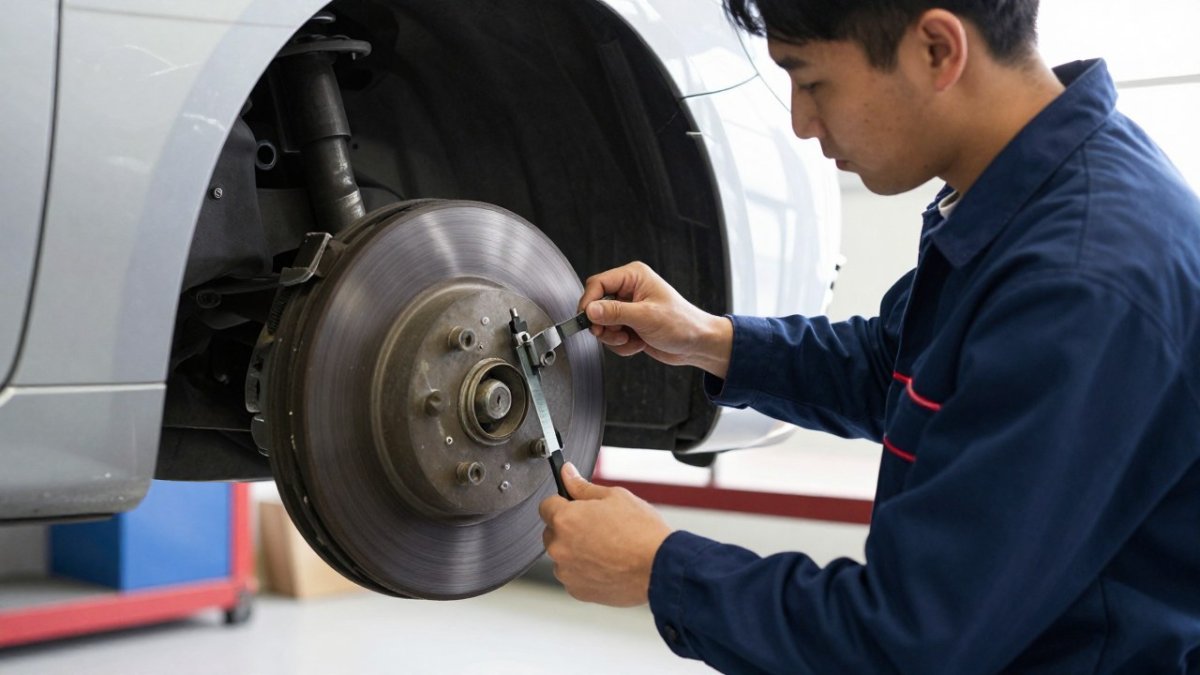
Here are the main suspects, and how each one behaves.
Warped Rotors and Disc Thickness Variation
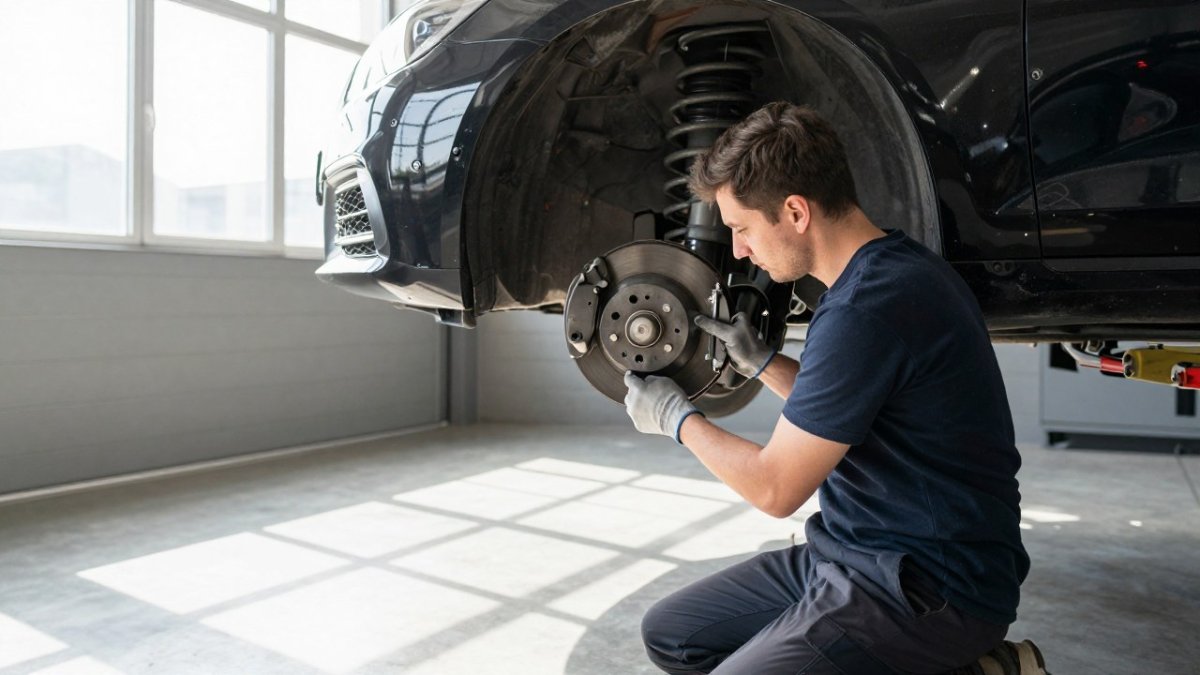
Warped rotors and disc thickness variation are the leading causes of pedal pulsation. A rotor that is not perfectly flat pushes the pads in and out as it spins, and you feel that as a rhythmic throb.
Two things create this:
- Heat: Hard stops from highway speed can warp a thin rotor.
- Rotor runout: A rotor mounted off-center on a dirty hub surface wobbles slightly, then wears unevenly.
A technician measures rotor runout and thickness with a micrometer. If thickness varies beyond the manufacturer's spec, the rotor needs resurfacing or replacement. We cover the replacement timeline in our guide on when to replace European car brakes.
Worn or Contaminated Brake Pads
Brake pads that are worn unevenly, glazed, or coated in brake fluid or grease cannot grip the rotor evenly. The result is a shudder that often shows up as uneven pad wear across the pad face.
Watch for these signs:
- Squealing or grinding under light braking
- A pad that looks thinner on one side than the other
- Greasy residue on the rotor face
Sticking Calipers and Uneven Pad Wear
A sticking caliper keeps one pad pressed against the rotor after you release the pedal. That constant drag overheats the rotor and wears one pad faster than its pair.
Common symptoms of a sticking caliper:
- The car pulls to one side when braking
- One wheel runs hotter than the others
- Uneven pad wear on a single wheel
Here are the main causes of brake vibration and how each one behaves.
| Problem | Cause | What you notice |
|---|---|---|
| Warped rotors and disc thickness variation | Heat from hard stops or rotor runout on a dirty hub | Rhythmic pedal pulsation |
| Worn or contaminated brake pads | Uneven wear, glazing, brake fluid or grease | Shudder and uneven pad wear |
| Sticking caliper | Caliper keeps one pad pressed on the rotor | Pull to one side, one wheel hotter |
Car Shakes When Braking at High Speeds: What It Means
A car shakes when braking at high speeds because the fault amplifies as rotor speed increases. At highway speed, even a few thousandths of an inch of lateral rotor runout becomes a strong vibration you feel through the steering wheel and brake pedal. The faster the rotor spins, the more times per second the pads are pushed in and out, and the more the whole steering and suspension assembly is excited.
High-speed shaking usually points to one of three families of causes, and the way you separate them matters more than the list itself:
- Brake-source vibration: rotor runout or disc thickness variation, a pad transfer layer smeared unevenly on the rotor face, or a caliper that drags only when hot. These typically appear or worsen after several hard stops, not on the first cold stop.
- Wheel-end vibration: uneven tire wear, a wheel out of balance, a bent wheel, or a tire with a shifted belt. These often shake at a specific speed band even without braking, then get worse when the brakes load the corner.
- Suspension and steering wear: worn control-arm bushings, tie-rod ends, ball joints, or strut mounts let the corner move under braking load. The brakes may be fine, but the worn joint transmits and magnifies the shudder into the wheel and floor.
A practical way to narrow it down before you pay for a diagnosis:
- Note the speed band. A shake that appears only between roughly 50 and 70 mph and fades above or below that range leans toward wheel balance or tire uniformity. A shake that tracks braking pressure leans toward the brakes.
- Note where you feel it. Pulsation mainly in the brake pedal points to the front or rear rotors. Shaking mainly in the steering wheel points to the front corners. Vibration felt through the seat or floor points to the rear.
- Note when it started. If it began within a few hundred miles of a brake job, suspect installation: hub-face cleanliness, uneven wheel fastener torque, or pads that were never bedded.
- Try a light vs. hard stop. A shudder that only shows up under hard braking from highway speed suggests heat-related rotor variation or a caliper that binds when hot.
At the shop, the check is measurement, not guesswork. A proper brake inspection measures rotor runout against the manufacturer's specification and checks disc thickness variation with a micrometer, along with the other checks described above.
Watch out: a high-speed shake that is accompanied by a pull to one side, a burning smell from one wheel, or a wheel that is noticeably hotter than the others after a drive can indicate a dragging caliper, and that corner should be inspected before the next highway trip.
Because high-speed shaking often traces to suspension or alignment, it is worth having the suspension system checked alongside the brakes.
Car Shakes When Braking at Low Speed: What It Means
A car shakes when braking at low speed often points to a different set of causes than highway vibration. Low-speed shudder usually comes from:
- Brake contamination on the pads or rotors
- A sticking caliper dragging at low speed
- Improper installation after a recent brake service
If the shake appeared right after new pads went on, the problem is likely installation-related, not a worn part.
Is a Car That Shakes When Braking Dangerous?
A car shakes when braking and is not just annoying, it is a safety concern. Vibration signals that your brakes are not applying evenly, which can lengthen stopping distance in an emergency.
The risk grows with speed and with how long you ignore it. A mild shudder today can become a hard pull or a failed stop later.
Get it inspected promptly if you notice:
- Shaking that worsens week over week
- A pull to one side under braking
- Grinding or metal-on-metal noise
- A soft or spongy brake pedal
- An ABS light on the dash
An ABS fault can mimic mechanical vibration, so it is worth understanding ABS system service if a warning light is involved.
Car Shakes After Changing Brake Pads: Causes and Fixes
A car shakes after changing brake pads for one of a few reasons, and most trace back to installation. The usual suspects:
- Hub surface was not cleaned before the new rotor went on
- Wheel fastener torque was uneven or over-tightened
- New pads were not bedded correctly against the rotor
- Improper installation left a caliper or pad clip misaligned
Correct brake bedding matters. After new pads go on, a series of moderate stops from speed seats the pad material evenly. Skip that step and you can get uneven transfer layers and a fresh shudder.
European Brake System Nuances and Diagnostic Checks
European brakes are not harder to fix, but they punish shortcuts. BMW, Audi, Mercedes, and Porsche models often pair larger rotors with tighter tolerances, so small runout shows up sooner, and several systems add electronic layers that change how a fault presents and how a repair must be performed. This is the part most generic brake-vibration guides skip.
Model-specific tolerances and procedures. Runout and thickness-variation limits, wheel fastener torque values, and pad-bedding procedures vary by model and even by model year. A technician should look up the specification for the specific vehicle rather than applying a generic number. The same applies to rotor replacement: some European rotors are designed to be replaced rather than resurfaced, and some are paired with specific pad compounds.
A proper diagnosis includes:
- Measuring rotor runout with a dial indicator and disc thickness variation with a micrometer, compared against the manufacturer's specification for that model
- Checking brake fluid condition and looking for brake contamination on pads and rotors
- Inspecting calipers for drag, slide-pin wear, and correct electronic parking brake retraction
- Scanning for ABS and chassis codes before condemning mechanical parts
- Verifying wheel fastener torque and hub cleanliness
Pricing depends on the vehicle model, the axle being serviced, and the parts selected. For current pricing or a quote, contact Euro Specialist directly.
European cars also need the right tools for the job. Our article on why European cars need specialized tools explains why generic shop equipment can miss these tolerances.
Schedule a Brake Inspection with Euro Specialist
If your European car vibrates when braking, stop guessing and get a real diagnosis. Our master-certified technicians inspect the brake system before recommending any repairs.
You can review what our brake service includes and book an appointment that fits your schedule. Every job is backed by our warranty, and we explain what we find before we touch a wrench.
Don't wait for a shudder to become a hard pull or a longer stop. Euro Specialist brings master-certified technicians, expertise across all European makes, and a family-owned approach to every brake job, with all work warrantied. Get started with Euro Specialist and drive with confidence again.
Frequently Asked Questions
Is it normal for a car to vibrate when braking?
No, vibration during braking is not normal and usually signals a problem with the brake system, tires, or suspension. In a European car, the most common culprits are uneven rotor wear, disc thickness variation, or a sticking caliper. Ignoring the shake can lead to longer stopping distances and more expensive repairs. If your European car vibrates when braking, have a master-certified technician inspect the rotors, pads, and calipers before the issue worsens.
Can worn brake pads cause vibration when braking?
Worn brake pads can contribute to vibration, especially if they wear unevenly or become contaminated with grease or debris. However, the more common cause is disc thickness variation or rotor runout. If your car shakes after changing brake pads, improper installation or missing hardware like shims can also create a shake. A proper brake inspection should measure pad thickness and rotor runout to pinpoint the source.
Why does my European car shake when braking at high speeds?
High-speed braking vibration often points to rotor runout or uneven pad deposits on the brake discs. European performance cars generate more heat during hard stops, which can warp rotors or leave uneven friction material transfer. Worn suspension components or tire balance issues can also amplify the shake at highway speeds. A technician should measure rotor runout and check for sticking calipers to confirm the cause.
Is it dangerous to drive a car that shakes when braking?
Yes, a car that shakes when braking can be dangerous. Vibration often means the brake system is not applying force evenly, which can increase stopping distance and reduce control, especially in an emergency. If the shake is severe or accompanied by a pulling sensation or soft pedal, stop driving and have the vehicle inspected immediately. A brake inspection at a shop specializing in European cars will identify whether the issue is rotors, calipers, or another safety-critical component.