 ultimate-guide
Why European Cars Need Specialized Tools
Table of Contents
- The Engineering Behind European Vehicle Complexity
- Advanced Electronics and Computer Modules in European Cars
- European Car Diagnostic Tools: Why Standard Scanners Fall Short
- Specialized European Car Repair Tools and Equipment
- European Car OBD Scanner Limitations and Solutions
- European Car Service Requirements and Manufacturer Specifications
- Why Precision, Expertise, and Proper Tools Matter for Your European Vehicle
- Frequently Asked Questions
Last Updated: October 4, 2026
The Engineering Behind European Vehicle Complexity
European vehicles are engineered to different standards than their American counterparts. Manufacturers like BMW, Audi, Mercedes-Benz, and Porsche prioritize precision, performance, and advanced technology integration in ways that fundamentally change how these cars operate and how they must be serviced. The tight tolerances, sophisticated electrical architecture, and manufacturer-specific components mean that working on a European car requires more than general automotive knowledge.
At Euro Specialist, we've spent years understanding why european cars need specialized tools and why European vehicles demand a different approach to maintenance and repair. The engineering philosophy behind European cars creates both their appeal and their complexity. These vehicles combine high-performance engines, advanced suspension systems, and integrated computer modules that work together in ways most standard repair shops simply aren't equipped to handle.
The core issue is straightforward: European manufacturers design their vehicles with precision specifications that leave little room for error. A suspension component that might have a tolerance of 0.5 millimeters on a domestic vehicle could have a tolerance of 0.1 millimeters on a European car. This level of precision requires specialized knowledge, calibrated equipment, and technicians trained specifically on these systems.
Advanced Electronics and Computer Modules in European Cars
Modern European vehicles contain multiple computer modules that communicate constantly. These aren't simple engine control units, they're integrated networks managing everything from fuel injection and transmission behavior to suspension stiffness, brake distribution, and climate control. A single fault in one module can trigger cascading issues across multiple systems.
European car manufacturers embed their proprietary software deeply into vehicle operation. When a component fails or needs adjustment, the fix often requires reprogramming or recalibrating that software to manufacturer specifications. This is where general mechanics hit a wall. Without access to manufacturer-specific diagnostic software and training, technicians cannot properly address electrical system faults.
The wiring harnesses in European vehicles are also more complex than domestic alternatives. Rather than simple point-to-point connections, European cars use multiplexed wiring systems where signals travel along shared communication lines. A corroded connection or damaged wire can affect multiple unrelated systems simultaneously. Diagnosing these issues requires understanding the entire communication network, not just individual circuits.
Consider what happens when a sensor fails on an Audi or BMW. The vehicle doesn't simply report "sensor malfunction." Instead, it logs a fault code that references a specific module, a specific communication protocol, and a specific diagnostic procedure. A technician without manufacturer training might see the code and assume a simple sensor replacement will fix it. In reality, the sensor may be fine, the issue might be in the wiring, the module itself, or the calibration after replacement.
European Car Diagnostic Tools: Why Standard Scanners Fall Short
Many shop owners believe a standard OBD-II scanner is sufficient for any vehicle. This misconception costs customers time, money, and frustration. While OBD-II scanners can read basic engine codes on European vehicles, they cannot access the deeper diagnostic information that European manufacturers embed in their systems.
European car diagnostic tools must communicate with multiple modules simultaneously. They need to read and interpret proprietary fault codes, access manufacturer-specific service procedures, and perform live data streaming on systems that standard scanners simply don't recognize. A generic OBD-II scanner might tell you that the transmission has a fault code, but it won't tell you whether the issue is the transmission itself, the wiring to the transmission module, or a calibration problem in the engine control unit affecting transmission behavior.
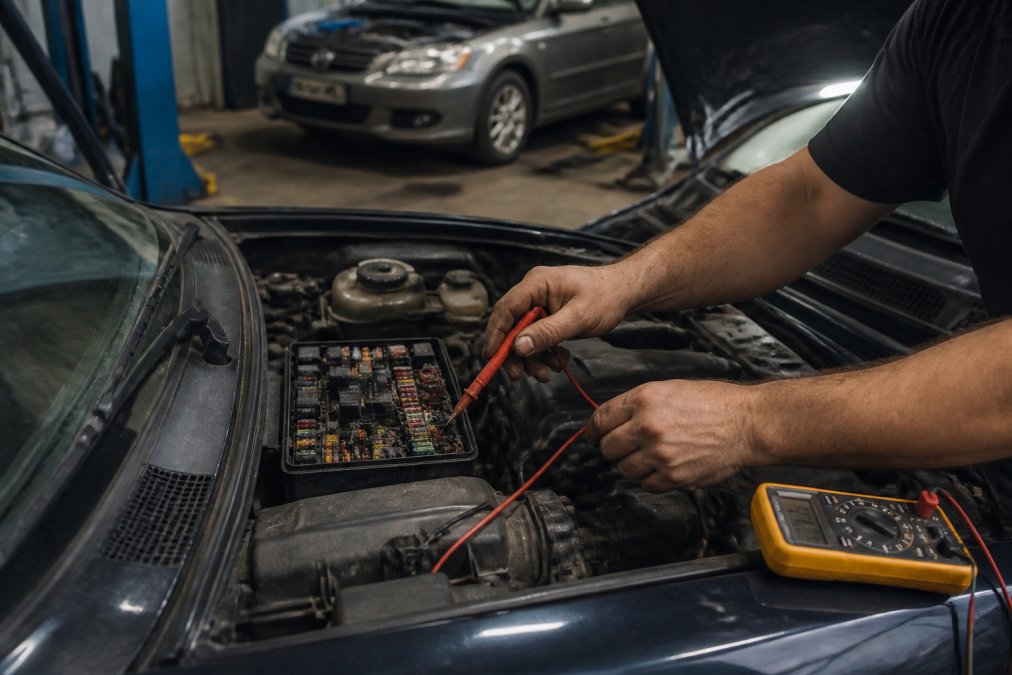
The limitation becomes obvious when you try to diagnose electrical issues. European vehicles use sophisticated multiplexed systems where a fault in one area can manifest as symptoms in completely different areas. Without tools that can map these communication networks, a technician is essentially guessing. They might replace components that are actually functioning correctly, leaving the real problem undiagnosed.
Manufacturer-specific diagnostic equipment goes far beyond reading fault codes. These tools allow technicians to command specific components to perform actions, monitor real-time data from multiple modules simultaneously, and perform the calibration procedures that European cars require after component replacement. A brake sensor replacement on a European vehicle, for example, often requires recalibration of the entire brake system after installation, something a standard scanner cannot do.
Specialized European Car Repair Tools and Equipment
The mechanical tools required for European vehicle repair extend well beyond what a general shop maintains. European manufacturers use fasteners, connectors, and component designs that differ from domestic standards. More importantly, many European repairs require precision measurement and adjustment equipment that costs thousands of dollars.
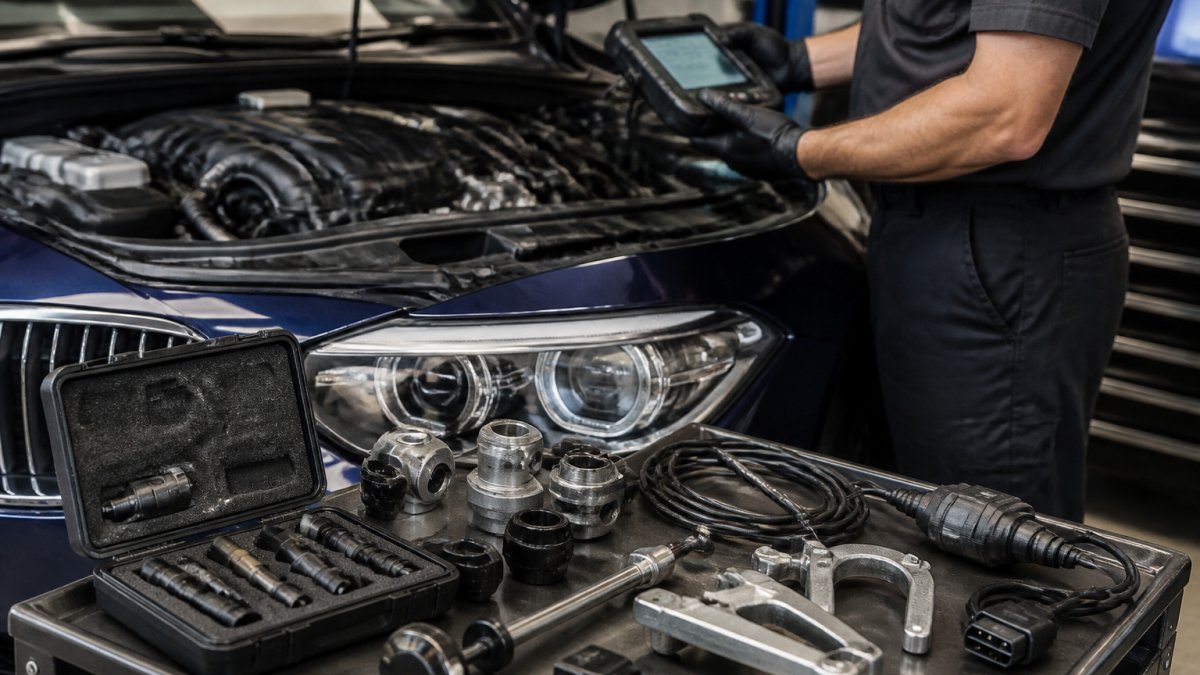
Suspension work on European vehicles illustrates why specialized equipment matters. Many European cars use air suspension systems or adaptive dampers that require specific calibration after service. A shop without the proper alignment equipment and calibration tools cannot properly service these systems.
Brake service on European vehicles requires different approaches than domestic cars. Many European manufacturers use integrated brake systems where the ABS module, electronic stability control, and brake pressure distribution are all interconnected.
Engine diagnostic work on European vehicles requires specialized equipment for fuel injection service, intake valve cleaning, and carbon buildup removal. European engines, particularly direct-injection engines, accumulate carbon deposits differently than older fuel-injection designs. Removing this buildup requires equipment and procedures specific to the manufacturer's engine design.
Transmission service on European vehicles, whether manual, automatic, or dual-clutch, requires manufacturer-specific fluid specifications and often requires reprogramming after service. Using the wrong fluid or failing to reprogram the transmission can cause shifting problems, reduced performance, or premature failure. This is not a procedure a general shop can safely perform.
European Car OBD Scanner Limitations and Solutions
Understanding what a standard OBD-II scanner can and cannot do is crucial for European vehicle owners. These devices read standardized diagnostic codes that all vehicles are required to support. On a European car, this means you can access basic engine and emissions information. You can see that the oxygen sensor is malfunctioning or that the catalytic converter efficiency is below threshold.
But here's where the limitation becomes critical: European vehicles store thousands of manufacturer-specific codes that standard scanners cannot access. A BMW might have 50 different codes related to its iDrive infotainment system alone. An Audi might have specific codes for its Quattro all-wheel-drive system.
Manufacturer-specific diagnostic equipment solves this problem. Tools like BMW's ISTA, Audi's VAS, and Mercedes-Benz's Star Diagnostic can access the full range of codes, perform live data monitoring on all modules, and execute the service procedures that these vehicles require.
For European vehicle owners, this creates a practical reality: if your vehicle needs complex electrical diagnostics or requires service procedures beyond basic maintenance, you need a shop with manufacturer-specific tools. A shop that relies on standard OBD-II scanners is working with incomplete information. They might identify the problem eventually through trial and error, but the process will be slower and more expensive.
The solution for owners is straightforward: seek shops that invest in proper diagnostic equipment. Ask whether a shop has manufacturer-specific diagnostic tools before bringing your vehicle in for complex work. A shop that has invested in the right equipment demonstrates commitment to proper diagnostics and repair procedures.
European Car Service Requirements and Manufacturer Specifications
European manufacturers publish detailed service requirements that differ significantly from general automotive maintenance guidelines. These specifications cover everything from fluid types and change intervals to component replacement procedures and calibration requirements.
Fluid specifications illustrate the precision European manufacturers demand. A BMW might require a specific type of synthetic oil with particular viscosity and performance characteristics. Using a different oil, even one that meets general automotive standards, can affect engine performance and longevity. The same principle applies to transmission fluid, coolant, brake fluid, and power steering fluid.
Component replacement procedures on European vehicles often include steps that general shops skip. Replacing a water pump on some European vehicles, for example, requires draining the cooling system, removing multiple components to access the pump, and then bleeding the cooling system through a specific procedure to remove air pockets.
Electrical component replacement frequently requires recalibration or reprogramming. Replacing a door module on a newer BMW might require coding the new module to match the vehicle's configuration. Replacing a battery on some European vehicles requires the diagnostic equipment to inform the vehicle that a new battery has been installed, allowing the vehicle to recalibrate its battery management system.
Brake service on European vehicles often requires specific procedures that general shops overlook. Many European vehicles have integrated brake systems where the ABS module controls brake pressure distribution. After replacing brake components, the system must be bled through specific procedures that sometimes require the diagnostic equipment to command the ABS module through particular cycles.
Why Precision, Expertise, and Proper Tools Matter for Your European Vehicle
The convergence of advanced engineering, sophisticated electronics, and manufacturer-specific requirements means that European vehicle repair is fundamentally different from general automotive work. A technician might have 20 years of experience working on domestic vehicles but still lack the specific knowledge required to properly service a European car.
Precision matters because European vehicles are engineered with tight tolerances and integrated systems. A suspension alignment that's off by a few millimeters on a domestic vehicle might be acceptable. On a European vehicle, this same misalignment can cause handling problems, premature tire wear, and reduced safety.
Expertise matters because European vehicles require understanding of systems and procedures that differ from domestic standards. A technician working on European vehicles must understand multiplexed electrical systems, manufacturer-specific diagnostic procedures, and the integration between mechanical and electronic components.
Proper tools matter because they enable accurate diagnosis and correct repair procedures. A shop without manufacturer-specific diagnostic equipment is working with incomplete information. A shop without precision measurement equipment cannot properly perform alignment or suspension work.
The practical outcome is that attempting to save money by taking your European vehicle to a general repair shop often costs more in the long run, which is precisely why european cars need specialized tools and expertise.
Euro Specialist exists because European vehicles deserve technicians who understand their complexity. Our master-certified technicians have invested in the training and equipment required to properly service all European makes. We understand the precision requirements, the electrical systems, and the manufacturer-specific procedures that general shops often overlook.
| Aspect | Why It Matters | What It Requires |
|---|---|---|
| Advanced Electronics | Integrated modules control multiple vehicle systems | Manufacturer-specific diagnostic equipment |
| Precision Engineering | Tight tolerances affect performance and safety | Specialized measurement and alignment tools |
| Manufacturer Specifications | Fluids, procedures, and calibration differ by brand | Technician training specific to each manufacturer |
| Complex Diagnostics | Faults span multiple interconnected systems | Tools that access all modules and fault codes |
| Specialized Components | European vehicles use unique parts and designs | Inventory and knowledge of European-specific components |
European vehicles represent the pinnacle of automotive engineering, but that sophistication comes with real service requirements. Taking your European car to a shop without manufacturer-specific expertise and equipment is like taking a complex medical imaging device to a general repair technician, they might be well-intentioned, but they lack the specialized knowledge to handle your vehicle properly. According to automotive industry standards for diagnostic equipment, proper diagnosis requires access to manufacturer-specific information.
Frequently Asked Questions
Can a regular mechanic work on a European car?
A general mechanic can handle basic maintenance like oil changes, but European cars with advanced electronics, tight tolerances, and manufacturer-specific systems require specialized knowledge. Complex repairs, electrical diagnostics, and computer module work demand expertise specific to European engineering and access to proper diagnostic tools. Without this specialization, you risk misdiagnosis, improper repairs, and costly damage.
Can a generic OBD-II scanner diagnose European cars?
A standard OBD-II scanner reads basic fault codes but cannot access the advanced systems in European vehicles. European cars use manufacturer-specific protocols, proprietary software, and complex computer modules that require specialized European car diagnostic tools. A generic scanner may miss critical electrical faults, suspension issues, or performance problems that only manufacturer-level diagnostics can reveal.
Why do European cars need special oil and maintenance?
European manufacturers design engines with precise tolerances and advanced fuel injection systems that demand specific oil viscosity grades and quality standards. Using incorrect oil can damage tight engine tolerances and void warranties. European car service requirements also include specialized fluid types, filter specifications, and maintenance intervals tailored to each model's engineering. Proper maintenance preserves performance and reliability.
What makes European car repair tools different from standard tools?
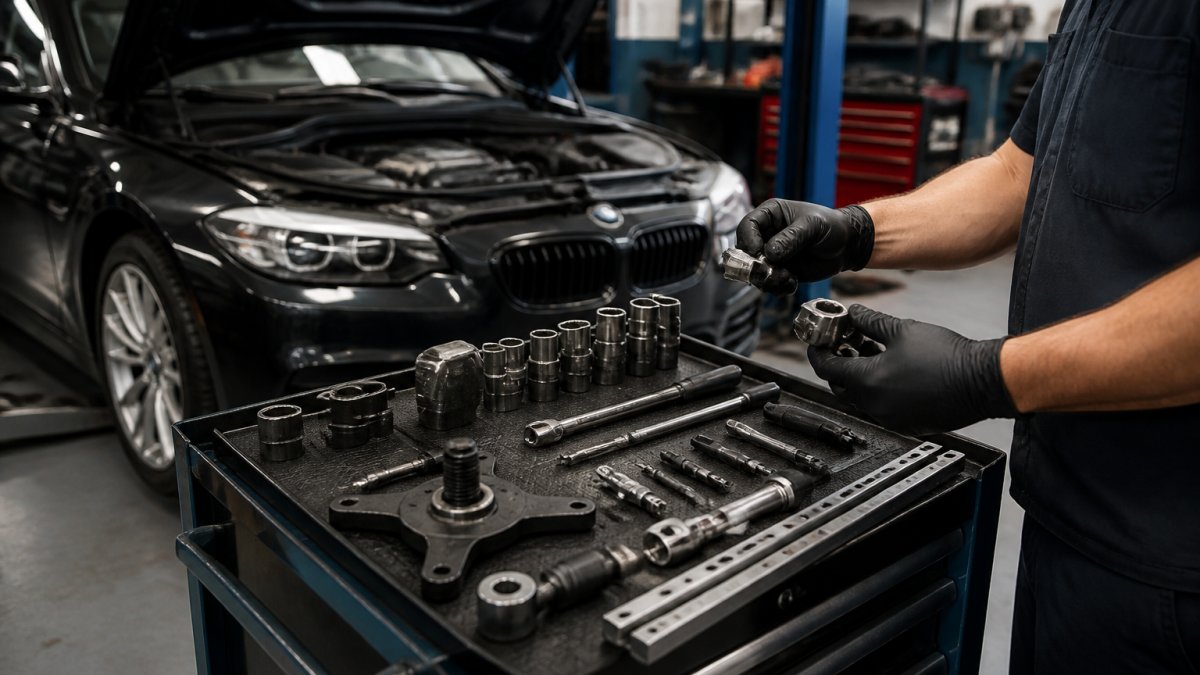
European car repair tools are engineered for precision work on advanced systems. They include manufacturer-specific diagnostic equipment, specialized socket sets for unique fastener designs, computer programming modules, and electronic testing devices. Standard tools often don't fit European fasteners or access proprietary systems. Using proper specialized tools prevents damage, ensures accuracy, and reduces repair time and costs.