 blog
7 EuroPauto vs Dealer Service Alternative Pricing Points
Last Updated: November 5, 2026
Quick Summary
Europauto pricing differs from dealer service alternative pricing mainly in labor rate, parts cost, and diagnostic fees, not in book labor hours. Request an itemized written estimate from each shop and compare line by line, since a lower total does not automatically mean better value.
- Compare labor hours, labor rate, parts cost, and diagnostic fees line by line, not just the bottom-line total.
- Labor hours should generally match when both shops use the same published labor time guide.
- Ask whether a diagnostic fee is credited toward the repair if you approve the work.
- A 24-month/24,000-mile warranty is a different product from a 12-month/12,000-mile warranty.
- Ask each shop to explain large labor-hour differences and provide part numbers before comparing totals.
Table of Contents
- EuroPauto vs Dealer Service Alternative: What the Pricing Analysis Shows
- European Car Repair Estimate Comparison: Reading Line Items Side by Side
- Where the Savings Come From: Labor Rates, Parts Markup, and Service Efficiency
- BMW Starter Replacement Cost: Why the Same Job Produces Different Quotes
- European Auto Repair Warranty Comparison: What the Fine Print Actually Covers
- Questions to Ask an Auto Repair Shop Before You Approve the Estimate
- Book a Written Estimate and Compare the Numbers Yourself
- Frequently Asked Questions
EuroPauto vs Dealer Service Alternative: What the Pricing Analysis Shows
The U.S. automotive service market is estimated at USD 211.1 billion in 2026 and forecast to reach USD 291.5 billion by 2032, according to Mordor Intelligence's market analysis. Within that market, the europauto vs dealerservicealternative pricing analysis comes down to one question: what actually drives the number on your estimate? A repair estimate is an itemized written quote listing labor hours, parts, and fees for a specific job on a specific vehicle. At Euro Specialist, we build every estimate that way, line by line, so owners of European vehicles can see exactly what they are paying for. Dealership service and independent European specialists can differ in labor rates and parts pricing, so the most reliable way to compare is to request a written, itemized estimate from each. Below, we break down where those differences show up and how to verify them yourself.
European Car Repair Estimate Comparison: Reading Line Items Side by Side
Most owners compare the bottom line and stop there. That is the first mistake. A useful European car repair estimate comparison starts with four lines, not one: labor hours, labor rate, parts cost, and diagnostic or shop fees. Taxes and disposal charges sit below those. If a quote collapses all of that into a single number, you cannot compare it to anything.
Here is the structure every written estimate should follow, using a hypothetical BMW starter replacement to show the math. The figures below are illustrative and are not a quote for your vehicle, your make, model, year, engine, and diagnostic findings will change them.
| Line item | Dealership-style estimate | Independent European specialist estimate |
|---|---|---|
| Labor hours (book time) | 4.5 hours | 4.5 hours |
| Labor rate | $180/hour | $150/hour |
| Labor subtotal | $810 | $675 |
| Parts (OEM starter) | $420 | $360 |
| Diagnostic fee | $180 | $120 |
| Shop supplies and disposal | $35 | $25 |
| Estimated tax (on parts) | $33 | $28 |
| Estimated total | $1,478 | $1,208 |
Read the table by column, not by total. When comparing estimates, labor hours should generally match if both shops use the same published labor time guide. Differences often appear in the labor rate, the parts pricing, and any diagnostic fee.
When comparing quotes, ask each shop to explain any large difference in labor hours and to provide the part number and labor time source before you compare totals.
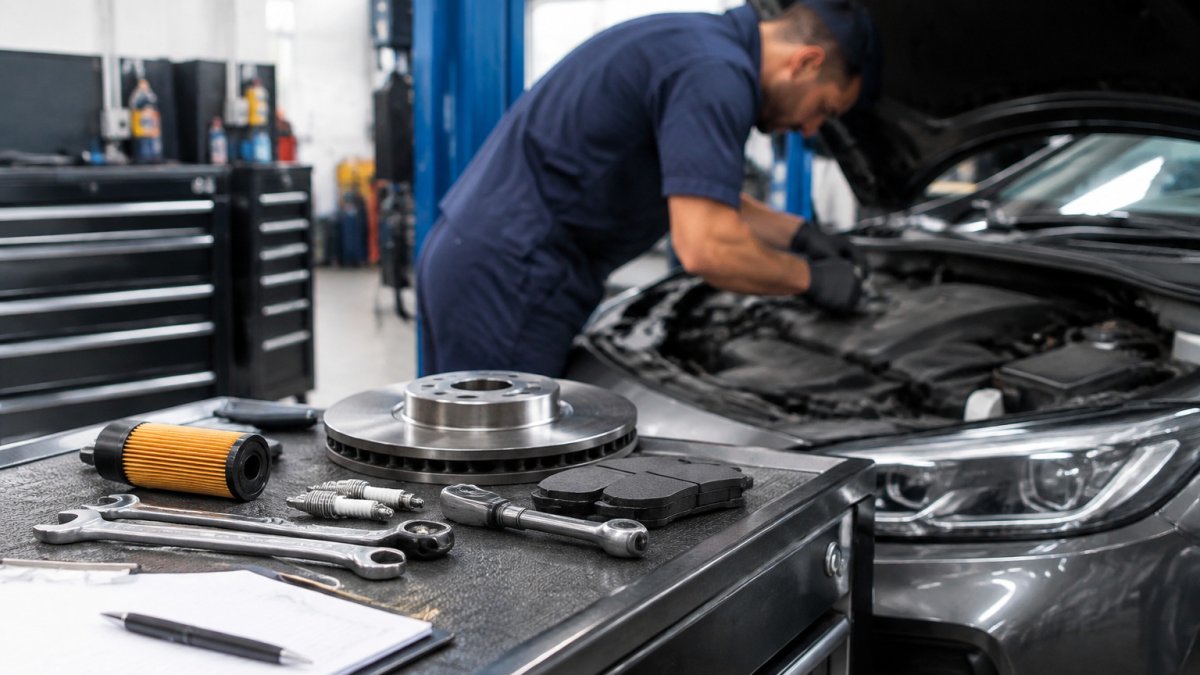
Parts are the second lever. OEM parts are built to the manufacturer's specification; high-quality aftermarket parts can meet the same standard at a lower price. The parts line should name the tier and list the part number, not just say "starter." A rebuilt or remanufactured unit is a third tier and should be labeled as such.
Diagnostic fees deserve their own line. A shop that charges a diagnostic fee and then applies it to the repair is offering a different product from one that charges a stand-alone inspection fee. Ask whether the fee is credited toward the work if you approve the repair.
Taxes and shop supplies are small lines that change the total. Sales tax rules on parts and labor vary by state, and shop supply fees are not always taxable. A quote that omits them is not comparable to one that includes them.
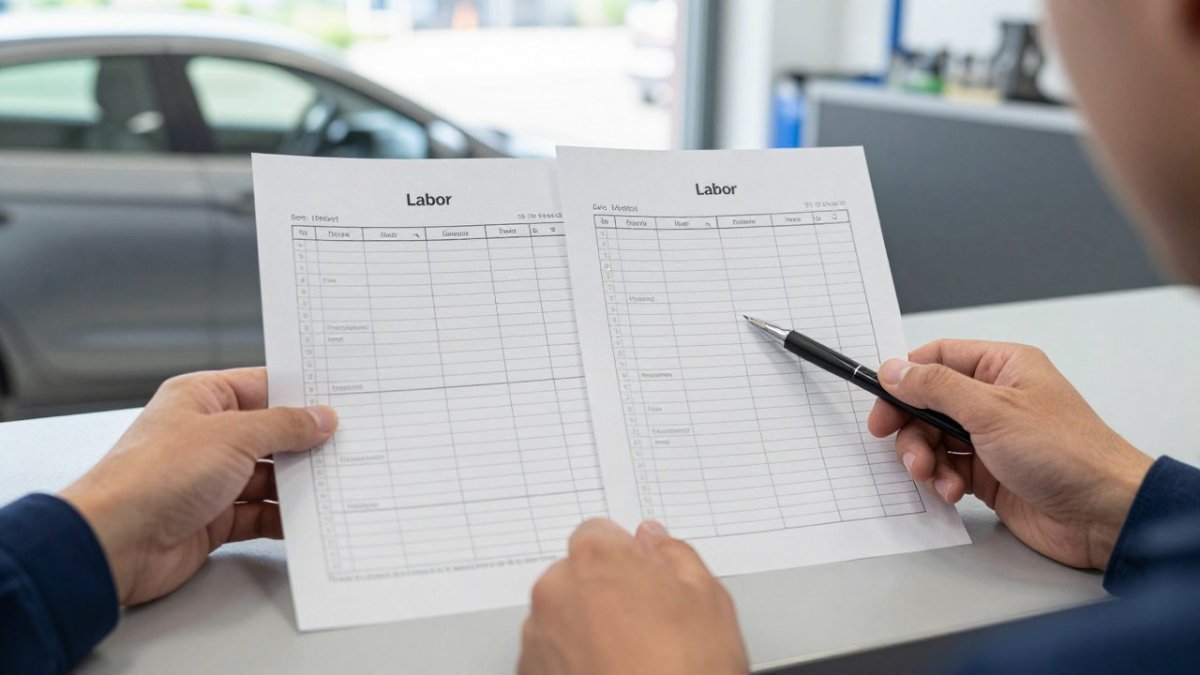
When you have two estimates in hand, put them in the same format before you decide. The quote-comparison checklist below gives you the questions to ask about each line.
Where the Savings Come From: Labor Rates, Parts Markup, and Service Efficiency
One caution: a lower quote does not automatically mean better value. A Fifth Gear comparison of independent versus dealership European service makes the point that value is more than the invoice amount, and the cheaper estimate can hide skipped steps. Compare what is included, not just the total.
BMW Starter Replacement Cost: Why the Same Job Produces Different Quotes
Different shops can quote different numbers for the same BMW starter replacement. The variables include:
- Labor hours: book time versus actual time, plus whether related fasteners or covers are replaced
- Parts tier: OEM versus high-quality aftermarket, and whether a rebuilt unit is offered
- Diagnostics: whether the starter was confirmed faulty or replaced on a guess
- Warranty: a longer repair warranty usually carries a slightly higher price
A proper assessment includes testing the battery and charging system before replacing a starter. If you already have a starter quote in hand, you can see the starter and alternator service we offer and compare it against what your estimate lists.
European Auto Repair Warranty Comparison: What the Fine Print Actually Covers
Warranty language is where pricing comparisons get decided. A repair warranty is the shop's written promise to fix a covered failure within a set period, and the terms vary widely enough that two quotes with the same total can be very different products.
Read for five things, in this order:
- Coverage period. A 24-month/24,000-mile warranty is a different product from a 12-month/12,000-mile warranty, even when both say "warranted." Note whether the mileage cap or the time cap comes first.
- Parts and labor. Some warranties cover parts only; others cover parts and labor. Parts-only coverage leaves you paying the labor on a repeat repair, which can be the larger half of the bill.
- Parts source. Ask whether the warranty applies to parts the shop supplied, to parts you supplied, or to both. Many shops exclude customer-supplied parts entirely, and some exclude aftermarket parts they did not source.
- Transferability. If you sell the car before the warranty expires, does the coverage transfer to the next owner? A transferable warranty adds resale value; a non-transferable one does not.
- Exclusions. Common exclusions include consequential damage (a failed water pump that takes out a belt), wear items (brake pads, filters, belts), failures caused by unrelated components, and damage from overheating or neglect. Read the exclusion list before you read the coverage list.
Watch out: a warranty that requires you to return to the same shop for all maintenance, or that voids if you miss an oil change interval, is narrower than it looks. Ask what maintenance conditions apply.
All work is warrantied. For a deeper walkthrough of how these clauses work, read our guide on what an auto repair warranty covers.
Questions to Ask an Auto Repair Shop Before You Approve the Estimate
The right questions turn a vague quote into a comparable one. Ask these before you sign:
- Is this estimate itemized by labor hours, labor rate, and parts?
- Are the parts OEM, and can I see the part numbers?
- Was the fault confirmed by diagnostics, or is this a guess?
- What exactly does the warranty cover, and for how long?
- Are there any fees not shown on this page?
- Will you call me before doing any work beyond this estimate?
If a shop cannot answer these plainly, that tells you something. Our checklist on how to find honest European auto repair walks through the same questions in more depth.
| What to Compare | Dealership Service | Independent European Specialist |
|---|---|---|
| Labor rate | Higher overhead, higher rate | Typically lower hourly rate |
| Parts | OEM at set markup | OEM or high-quality equivalent |
| Diagnostics | Manufacturer tools | European-specific tools |
| Warranty terms | Varies by dealer | Written terms, varies by shop |
| Estimate format | Itemized | Itemized when you ask |
Book a Written Estimate and Compare the Numbers Yourself
A pricing analysis is only useful if you run it on your own car. Ask for a written, itemized estimate from each shop, then compare the details side by side. The lowest total is not always the best value, but a transparent estimate usually is.
If you drive a BMW, you can request service and a written estimate from Euro Specialist.
Frequently Asked Questions
How do EuroPauto and Dealer Service Alternative compare on repair prices?
Neither publishes a public price list, so the only reliable comparison is a written, itemized estimate for the same repair on the same vehicle. Ask both for a line-by-line quote showing labor hours, the labor rate, part numbers, and whether parts are OEM or aftermarket. Pricing can differ between independent European specialists and dealerships, but a lower invoice alone does not prove better value once warranty terms and parts quality are factored in.
Is an independent European auto repair shop cheaper than a dealership?
In most cases, yes. Independent shops and dealership service departments can differ in labor rates and overhead. The gap widens on older vehicles where OEM parts are no longer required to keep a warranty intact. Request an itemized estimate from each and compare the labor rate, hours billed, and parts markup rather than the bottom-line total.
What factors affect the cost of European car repairs?
Five factors drive most of the difference: the labor rate, the number of hours billed for the job, whether parts are OEM or aftermarket, the diagnostic time required for electrical faults, and the vehicle model itself. A BMW starter replacement on a six-cylinder engine takes more labor than on a four-cylinder, and a job that requires removing the intake manifold adds hours. Ask each shop to break out diagnostic time separately so you can compare like for like.
What should I ask before approving a European car repair estimate?
Ask for the labor rate and the hours billed per operation, whether parts are OEM or equivalent, what the warranty covers and for how long, whether diagnostic time is capped, and whether the shop will call before adding any work beyond the original estimate. Also ask whether the technician working on your car is certified for your specific make. A shop that answers these plainly, in writing, is easier to hold to its quote when the bill arrives.
Comparing quotes takes an afternoon; approving the wrong one costs far more. Euro Specialist is a family-owned shop with master-certified technicians who work only on European vehicles, back every repair with a warranty, and hand you an itemized estimate before you commit. Get started with Euro Specialist and schedule an appointment to see the numbers for yourself.