 ultimate-guide
Is It Worth Driving for Luxury Car Service? 2026 Guide
Table of Contents
- How Luxury Car Service Pay Actually Works
- Luxury Chauffeur Requirements You Must Meet
- Luxury Car Service vs Rideshare: The Real Differences
- Professional Driver Salary Expectations in 2026
- The Costs You Pay Before Your First Shift
- Challenges That Separate Career Chauffeurs From Gig Drivers
- Conclusion
- Frequently Asked Questions
Last Updated: September 27, 2026
How Luxury Car Service Pay Actually Works
Whether it is worth driving for luxury car service comes down to one number: what you actually keep after costs. The headline rate you see advertised is rarely the number that lands in your account, and that gap trips up most new chauffeurs. At Euro Specialist, we talk to European luxury car owners every week, and the drivers who treat this work like a business rather than a gig are the ones who stay profitable.
Hourly Rates vs. Flat Trip Fees
Hourly billing suits events, weddings, and "as-directed" work where the client keeps the car on standby. Flat trip fees suit airport transfers and point-to-point runs, where the price is set before the wheels move. Hourly work tends to pay better per hour but leaves gaps between bookings.
Tips, Gratuities, and Hidden Income
Gratuities are the least predictable part of the job. Corporate accounts often include a service charge; private clients tip at their discretion. Waiting time, extra stops, and holiday surcharges can quietly add more to a paycheck than the base rate.
Luxury Chauffeur Requirements You Must Meet
The requirements to drive luxury car service are stricter than rideshare platforms, and that is the point. Operators screen for licensing, driving history, and presentation because their clients are paying for discretion and reliability, not just a ride. Expect a clean record, a professional appearance, and a vehicle that meets the operator's standard.

Licensing, Background Checks, and Chauffeur Endorsements
Most operators require a standard driver's license plus a clean motor vehicle record, and many states require a specific chauffeur endorsement or for-hire license on top of that. Requirements vary by state and by local authority, so verify with your state's licensing agency before you invest in anything else. Background checks and drug screening are standard.
Vehicle Standards and Appearance Expectations
Vehicle age limits, interior condition, and exterior cleanliness are usually spelled out in the operator's contract. A dark suit, polished shoes, and a clean vehicle are baseline, not optional. The U.S. Department of Transportation publishes guidance on for-hire vehicle operations that is worth reading before you commit.
Luxury Car Service vs Rideshare: The Real Differences
The difference between luxury car service vs rideshare is control. Rideshare apps dispatch you wherever the algorithm decides, at prices you cannot negotiate. Luxury car service lets you accept pre-booked work, set your availability, and build relationships with clients who request you by name. The trade-off is that you carry more of the setup cost and responsibility.
| Factor | Luxury Car Service | Rideshare |
|---|---|---|
| Pay structure | Hourly, flat fee, or account billing | Per-trip, algorithm-set |
| Schedule control | You accept pre-booked work | App dispatches you |
| Client expectations | Professional, discreet, punctual | Variable |
| Vehicle standard | High, often operator-specified | Personal vehicle minimums |
| Setup costs | Licensing, insurance, suit, vehicle | Vehicle and app signup |
Pay Structure and Schedule Control
Rideshare pays per trip with surge pricing you do not control. Luxury car service pays per booking or per hour, and you decide which bookings to take. That control is worth real money in the long run, but it only pays off if you can fill your calendar.
Client Expectations and Professional Standards
Luxury clients expect punctuality, discretion, and a quiet, clean cabin. They notice details: the temperature, the route, whether you opened the door. Meeting those expectations is what turns a one-time airport run into a standing weekly account.
Professional Driver Salary Expectations in 2026
Professional driver salary expectations vary widely by market, operator, and how much of your own vehicle and insurance you bring to the arrangement. Chauffeurs working corporate accounts in dense metro areas generally earn more than those relying on one-off private bookings, because corporate work is recurring and predictable.
The Three-Variable Income Model
Weekly gross = (booked hours × blended hourly rate) + flat-fee trips + gratuities + wait-time billings
What Top Earners Do Differently
The chauffeurs who earn the most treat the role like a small business. They answer inquiries fast, keep their vehicle spotless, and follow up after a job. Repeat clients and corporate accounts are the difference between a slow month and a full one. Three habits separate them from gig drivers:
- They quote in writing. A short text or email confirming pickup time, vehicle, and flat fee eliminates disputes and signals professionalism.
- They track cost-per-booked-hour, not just gross. Fuel, insurance, detailing, and depreciation all come out of the same paycheck. A driver billing a high rate in a vehicle that costs more per mile to run can net less than a driver billing a lower rate in a cheaper-to-maintain car.
- They build a client list they own. Corporate accounts that request you by name are worth more than any app rating, because the relationship survives rate changes and platform policy shifts.
The Cost Side Nobody Puts in the Salary Post
Salary expectations are meaningless without the expense side. Before you compare your projected gross to a rideshare driver's, subtract:
- Commercial insurance, a required monthly line item that rideshare drivers often carry at a lower tier.
- Vehicle depreciation, luxury sedans lose value faster per mile than economy cars, and high annual mileage accelerates it.
- Maintenance and consumables, tires, brakes, and fluids on a European luxury sedan cost more per service than on a mass-market vehicle, and the service intervals are often shorter.
- Detailing and presentation, a clean cabin is a client expectation, not a luxury, and it is a recurring cost.
The Costs You Pay Before Your First Shift
Setup costs are where new chauffeurs get surprised. Licensing and endorsements, commercial insurance, a suit and professional shoes, vehicle detailing, and ongoing maintenance all come out of your pocket before you earn a cent. Commercial insurance alone can be a significant monthly line item, and it is not optional if you are driving clients for hire.
A Structured Pre-Revenue Cost Breakdown
Most articles on this topic are anecdotal. What follows is a framework you can fill in with local quotes, the categories are consistent even when the numbers are not.
One-time costs (before your first paid trip):
- For-hire license or chauffeur endorsement. Many states require a specific endorsement on top of a standard driver's license, and some municipalities add a separate for-hire permit. Fees vary by state and by local authority, so verify with your state's licensing agency before you invest in anything else.
- Background check and drug screening. Standard for most operators, and often paid by the applicant.
- Professional attire. A dark suit, polished shoes, and a clean overcoat are baseline, not optional. Budget for at least two suits so you are never laundering on a workday.
- Vehicle preparation. Detailing, a phone mount, charging cables, bottled water, and a clean trunk setup. Small line items that add up.
Recurring costs (monthly or per-mile):
- Commercial insurance. This is the largest recurring line item for most chauffeurs and the one most often underestimated. Personal auto policies typically exclude for-hire use, so a separate commercial policy or a for-hire endorsement is required.
- Vehicle maintenance. European luxury sedans generally carry higher parts and labor costs than mass-market vehicles, and service intervals are often shorter. Budget for tires, brakes, and fluids on an accelerated schedule.
- Detailing. A clean cabin is a client expectation, not a luxury. Weekly or biweekly detailing is common for chauffeurs working corporate accounts.
- Fuel. Luxury sedans often require premium fuel, which carries a price premium at the pump.
The TCO Calculator Approach
Rather than guessing, build a simple total-cost-of-ownership model. In a spreadsheet, list every cost above in one column and your projected monthly gross in another. Divide total monthly cost by booked hours to get your cost per booked hour. That number is the real floor your rate has to clear before you earn anything.
DIY vs. Professional Service Thresholds
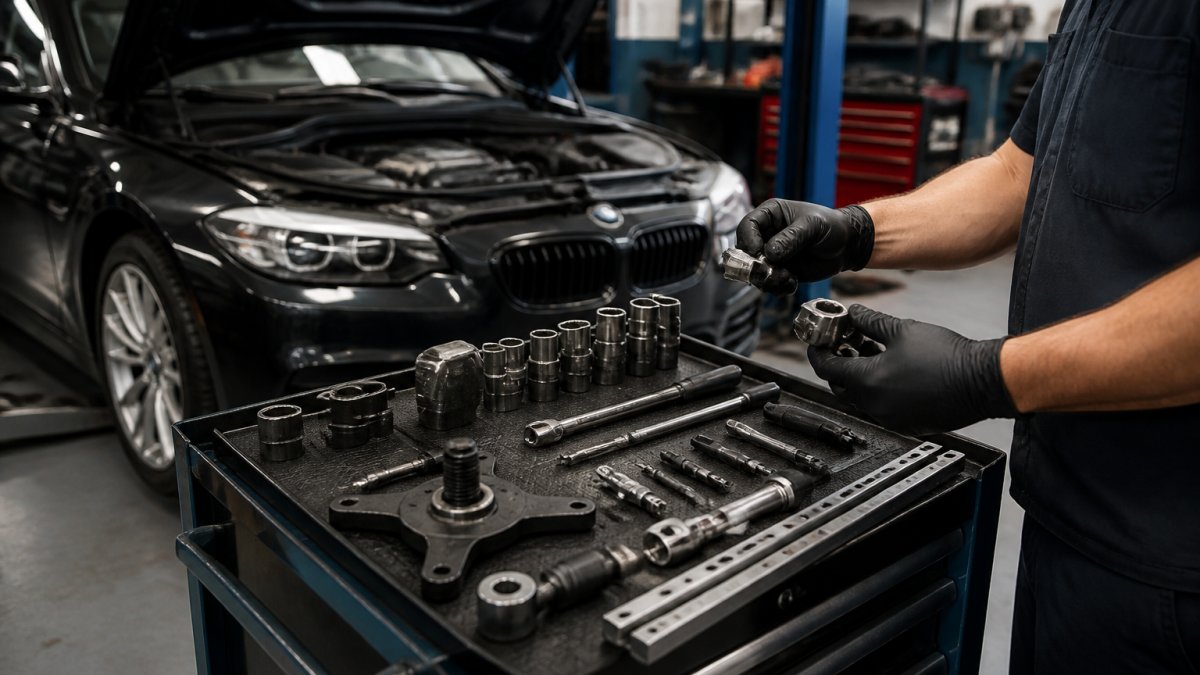
Not every maintenance task requires a shop. Cabin air filters, wiper blades, and exterior detailing are novice-friendly and can be done at home with basic tools. But diagnostic work on European luxury vehicles, electronic systems, adaptive suspension, transmission service, generally requires manufacturer-specific diagnostic equipment that independent shops and dealers invest in.
Challenges That Separate Career Chauffeurs From Gig Drivers
The work that separates a career chauffeur from a gig driver is patience and relationship-building, not driving skill. Anyone can drive a luxury sedan. Fewer people can sit in a parking lot for two hours waiting on a delayed flight and still greet the client warmly.
Managing Irregular Schedules and Long Waits
Early airport runs, late event pickups, and long standby periods are the norm. The pay is good, but the hours are irregular and the waiting is unpaid unless you bill for it. Chauffeurs who plan their week around booked blocks rather than hoping for steady flow handle the irregularity far better.
Building a Repeat Client Base
Repeat clients are the whole game. A corporate account that books you twice a week is worth more than a dozen one-off rides. Keep a simple record of client preferences, send a short follow-up after each job, and make it easy for them to request you again.
Conclusion
The real question is not whether luxury car service pays well in theory. It is whether you can build a client base that fills your calendar consistently. That requires the right vehicle, the right licensing, and a level of professionalism that most gig drivers never develop. Euro Specialist supports European luxury and performance vehicle owners with master-certified technicians, expertise across all European makes, and warranty-backed work on every job.
Frequently Asked Questions
What are the requirements to become a luxury chauffeur?
Most luxury car services require a valid driver's license, a clean driving record, passage of a background check, and a chauffeur endorsement where state law mandates it. You also need professional appearance, strong knowledge of local routes, and the ability to pass drug screening. Some employers prefer prior customer service experience. Requirements vary by state and employer, so confirm specifics with the company you apply to before investing in training or uniforms.
How much can you realistically earn driving for a luxury car service?
Professional driver salary expectations vary widely based on market, employer, and hours worked. Some chauffeurs earn an hourly base plus gratuities, while others work on flat trip fees. Full-time chauffeurs in major metro areas often earn more than rideshare drivers because of higher fares and consistent repeat clients. Your actual take-home depends on vehicle costs, fuel, insurance, and whether the company provides the car or you drive your own.
What is the difference between luxury car service vs rideshare?
Luxury car service focuses on pre-booked, professional transportation with higher standards for vehicle condition, driver appearance, and punctuality. Rideshare platforms connect you with on-demand passengers through an app, often at lower fares. Luxury chauffeurs typically earn more per trip, build recurring client relationships, and follow stricter dress and etiquette codes. Rideshare offers more flexibility but less income predictability and lower per-mile pay.
Do luxury car services provide the vehicle or do you use your own?
It depends on the company. Some luxury car services supply the vehicle, covering maintenance, insurance, and fuel. Others require you to own or lease a qualifying black sedan or SUV that meets their age, mileage, and appearance standards. Using your own vehicle means higher upfront costs but potentially higher earnings per trip. Ask each employer which model they use before applying so you can weigh the cost-benefit analysis accurately.