 ultimate-guide
Common Electrical Issues in Older BMW: Diagnosis and Fixes
Table of Contents
- Why Older BMWs Are Prone to Electrical Problems
- Battery Drain and Power Management Issues
- Dashboard Warning Lights and Fault Codes Explained
- How to Find Hidden Car Electrical Shorts
- Faulty Sensors, ECU Failures, and Module Problems
- Window Regulators, Ignition Systems, and Charging Faults
- BMW Electrical Diagnostic Tools and When to Use Them
- When to Handle It Yourself vs. When to Call a Professional
- Frequently Asked Questions
Last Updated: September 26, 2026
Why Older BMWs Are Prone to Electrical Problems
Older BMWs are engineering marvels, but their electrical systems are notoriously fragile. The culprit isn't poor design, it's complexity combined with aging. Modern BMWs pack dozens of electronic control modules, sensors, and power management systems into tight engine bays. Over time, corrosion, water intrusion, and component degradation create a perfect storm of electrical failures.
The common electrical issues in older BMW models stem from several overlapping factors. First, the vehicle's CAN bus architecture, the network that lets modules communicate, becomes vulnerable to grounding issues and corroded connectors. Second, the Intelligent Battery Sensor (IBS) and battery registration system, which manage power distribution, fail as the vehicle ages. Third, window regulators, ignition systems, and alternators wear out predictably. Most owners don't realize these failures are interconnected; fixing one symptom without addressing the root cause leaves the problem smoldering.
We've diagnosed many older BMWs with electrical gremlins. The owners who get results fastest are those who understand what's actually failing and why. That's what separates a $200 diagnostic from a $2,000 guessing game.
Battery Drain and Power Management Issues
Battery drain is the most common complaint we hear from older BMW owners. The vehicle sits for a week, and the battery dies. You charge it, drive for two days, and it's dead again. This isn't a battery problem, it's a parasitic drain problem.
Parasitic drain occurs when modules continue drawing power even when the vehicle is off. A healthy BMW should draw less than 50 milliamps in sleep mode. Older BMWs frequently pull 200-500 milliamps or more, draining a battery in days. The culprits are usually failing modules, stuck relays, or faulty sensors that won't enter sleep state.
BMW Battery Drain Symptoms to Watch For
The warning signs of battery drain are unmistakable. Your battery is fully charged, but after sitting overnight, the vehicle won't start. The dashboard lights flicker when you try to crank the engine. The car starts fine after a jump but dies again within hours of parking.
A secondary symptom is slow electrical response. Power windows operate sluggishly. The fuel pump hesitates on startup. Headlights dim when you engage the starter. These point to voltage drop under load, which suggests the alternator isn't charging properly or the battery terminals are corroded.
The hardest drain to catch is the slow bleed. The vehicle starts fine every morning but loses charge over two weeks of non-use. By the time you notice, you've got a dead battery and no obvious culprit. This type of drain typically originates from a module that's stuck in wake mode or a relay that won't fully disengage.
Intelligent Battery Sensor and Registration Failures
The Intelligent Battery Sensor (IBS) is a small device mounted on the negative battery terminal. It monitors voltage, current, and temperature to manage the vehicle's power distribution and charging strategy. When the IBS fails, the BMW's power management system goes haywire.
A failed IBS triggers multiple symptoms. The check engine light comes on. The alternator overcharges or undercharges. Battery drain accelerates. The vehicle may refuse to start intermittently. You might see error codes related to power management or battery voltage.
Battery registration is a related issue. Modern BMWs require the battery to be "registered" or "coded" into the vehicle's system when replaced. If registration fails, the vehicle won't recognize the new battery, and the charging system won't operate correctly. Many owners buy a new battery at a parts store, install it themselves, and wonder why the drain persists. The battery is fine, the registration is missing.
Dashboard Warning Lights and Fault Codes Explained
Dashboard warning lights are your BMW's way of screaming for help. A check engine light, battery warning light, or electrical system warning indicates a fault code has been logged in one or more modules.
Reading these codes requires an OBDII scanner or a more advanced diagnostic tool. A basic OBDII scanner will pull diagnostic trouble codes (DTC), which are standardized five-character codes starting with "P" (powertrain), "B" (body), "C" (chassis), or "U" (network). A P0101 code points to mass airflow sensor issues. A U0101 code indicates lost communication between modules on the CAN bus.
The challenge with older BMWs is that a single electrical fault can trigger codes in multiple modules. A corroded ground point might cause the alternator to appear faulty, the battery sensor to malfunction, and the charging system to fail, all simultaneously. Chasing individual codes without understanding the underlying electrical architecture wastes time and money.
How to Find Hidden Car Electrical Shorts
Finding a hidden electrical short is detective work. The short is drawing power constantly, draining the battery, but it's not obvious which circuit is responsible. This is where methodical testing separates amateurs from professionals.
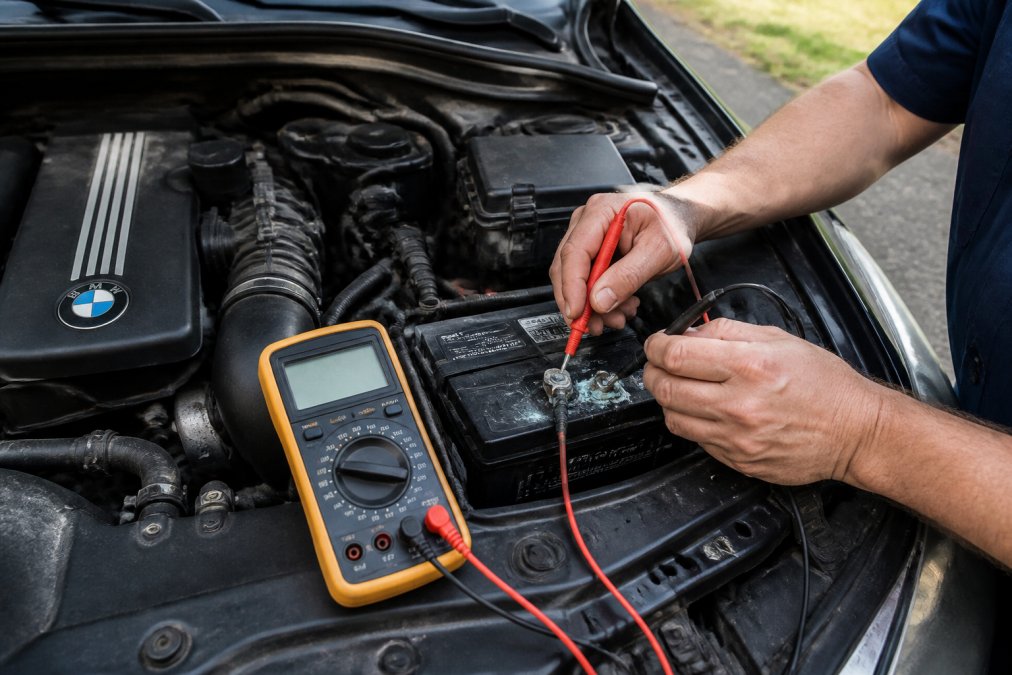
Start by measuring parasitic drain with a multimeter set to amperage mode. Disconnect the negative battery terminal and insert the multimeter's red probe between the battery and the terminal. A reading above 100 milliamps in sleep mode indicates a parasitic drain. Now the hunt begins.
The next step is isolating the circuit. Pull fuses one at a time and retest the amperage. When you remove a fuse and the amperage drops significantly, you've found the faulty circuit. Document which fuse it was. That circuit contains the short.
DIY Testing with a Multimeter
A multimeter is your most valuable diagnostic tool. Set it to DC voltage mode and probe the battery terminals. A healthy battery should read 12.6 volts at rest and 13.5-14.5 volts while the engine runs. Lower readings suggest charging system failure or a weak battery.
Switch to resistance mode to test for shorts in wiring. Disconnect the negative battery terminal first, this is critical for safety. Set the multimeter to the ohms setting and probe suspect wires or components. A reading of zero or near-zero ohms indicates a short. Infinite resistance suggests an open circuit.
Test ground points by placing one probe on a known good ground and the other on the suspect connection. Ground points corrode over time, especially near the engine block and chassis. A corroded ground point creates high resistance, which starves downstream components of proper voltage. Clean the connection and retest. Resistance should drop to near zero.
Identifying Water Ingress and Wiring Harness Damage
Water intrusion is a silent killer in older BMWs. Moisture enters through door seals, window regulator channels, or damaged weatherstripping. Once inside, it corrodes connectors, shorts circuits, and causes module failures. The damage often hides behind panels where you can't see it.
Look for white or green corrosion on connectors and terminals. Inspect wiring harnesses for cracks in insulation or pinched wires. Check door jambs and window channels for water pooling. If you find moisture, dry the area thoroughly and apply dielectric grease to all connectors to prevent future corrosion.
Wiring harness degradation is common in high-mileage BMWs. The plastic insulation becomes brittle and cracks. Exposed copper oxidizes and increases resistance.
Faulty Sensors, ECU Failures, and Module Problems
The Electronic Control Unit (ECU) is the brain of your BMW. It receives data from dozens of sensors and makes split-second decisions about fuel injection, ignition timing, and emissions control. When the ECU fails, the vehicle often won't start or runs poorly.
Window Regulators, Ignition Systems, and Charging Faults
Window regulators are electrical components that drive the window motor. In older BMWs, the regulator's plastic gears wear out, and the motor burns out from overwork. The window stops moving, or moves only partway. Replacement is the only fix, repair isn't practical.
BMW Electrical Diagnostic Tools and When to Use Them
A basic OBDII scanner reads fault codes and clears them. It's useful for identifying which systems are reporting errors, but it doesn't show the full picture. For older BMWs, you need a scanner that reads BMW-specific codes and can access multiple modules.
When to Handle It Yourself vs. When to Call a Professional
Some electrical work is DIY-friendly. Cleaning corroded battery terminals, replacing blown fuses, and checking connections are tasks any owner can handle. Testing with a multimeter falls into this category once you understand the basics. These fixes often solve 30-40% of electrical complaints without professional help.
Frequently Asked Questions
What are the most common electrical issues in older BMW models?
Older BMWs frequently experience battery drain, dashboard warning light failures, faulty sensors, window regulator malfunctions, and alternator charging problems. The Intelligent Battery Sensor (IBS) often fails, causing parasitic drain. Corroded battery terminals, degraded wiring harnesses, and water ingress into electrical modules compound these issues. Many electrical gremlins stem from the CAN bus system deteriorating over time. A professional diagnostic scan using an OBDII scanner can identify specific fault codes to pinpoint the exact problem.
Can a bad battery cause strange electrical issues in a BMW?
Yes. A weak or failing battery creates cascading electrical problems in BMWs because the power management system depends on stable voltage. Low battery voltage can trigger false fault codes, prevent the immobilizer from functioning correctly, cause window regulators to fail, and create sensor malfunctions. Additionally, a bad battery may not supply enough power for the Electronic Control Unit (ECU) to operate correctly, leading to check engine lights and multiple warning lights on the dashboard. Battery registration issues compound this further.
How do I know if my older BMW has a hidden electrical short?
Look for parasitic drain (battery dies when the car sits), blown fuses that immediately blow again after replacement, burning smells near electrical components, and flickering dashboard lights. Test for shorts using a multimeter set to resistance mode by disconnecting the negative battery terminal and measuring across the terminals. A reading below infinity indicates a short. Water damage in the trunk, door panels, or under the hood accelerates short development. Professional diagnostic tools can pinpoint the exact location by checking voltage at grounding points and relay connections.
What BMW electrical diagnostic tools do I need for DIY troubleshooting?
A basic multimeter is essential for testing voltage, resistance, and continuity at battery terminals, fuses, and grounding points. An OBDII scanner reads diagnostic trouble codes (DTC) and identifies which system is failing. For deeper diagnosis, a CAN bus analyzer helps test the communication network between modules. A test light is useful for checking power at fuses and relays. However, modern BMW electrical systems are complex; professional diagnostic equipment can access all ECU modules and perform battery registration coding that DIY tools cannot replicate.