 ultimate-guide
Expert Maintenance for Luxury European Cars
Table of Contents
- Why Expert Maintenance Matters for Luxury European Vehicles
- European Vehicle Service Intervals and Manufacturer Specifications
- Common Maintenance Issues in Luxury European Cars
- European Car Maintenance Cost vs Dealership: What You Actually Save
- The Role of OEM Parts and Precision Diagnostics
- Warranty Preservation and DIY vs Professional Maintenance Thresholds
- Your Preventative Maintenance Checklist for European Luxury Cars
- Frequently Asked Questions
Last Updated: September 29, 2026
Why Expert Maintenance Matters for Luxury European Vehicles
Expert maintenance for luxury European cars is essential to preserving your investment. BMW, Mercedes-Benz, Audi, and Porsche are engineered with precision tolerances and advanced technology that demand specialized knowledge. Misdiagnosis can cost thousands of dollars.
Most repair shops lack the factory-trained technicians and diagnostic software required to service European vehicles properly. Technicians trained on domestic vehicles miss critical issues in European electrical systems, transmission logic, and powertrain management, turning simple repairs into diagnostic nightmares.
Misdiagnosed electrical faults cost twice as much to fix. Transmission service performed without manufacturer specifications leads to premature failure. These common outcomes occur when precision diagnostics and factory-trained technicians aren't involved.
Resale value depends on service records showing proper maintenance at correct intervals. Warranty preservation requires OEM parts and documented procedures. Performance optimization demands understanding European automotive engineering.
European Vehicle Service Intervals and Manufacturer Specifications
European manufacturers publish detailed service intervals based on mileage and driving conditions. BMW specifies oil changes at 10,000-15,000 miles. Audi requires transmission fluid service every 40,000-60,000 miles. These are engineering requirements, not suggestions.
European manufacturers specify exact intervals based on vehicle diagnostics. Modern European cars monitor oil quality electronically and alert you when service is needed. Ignoring these signals costs money in premature component wear and lost resale value.
Service intervals are tied directly to warranty compliance and resale value. Missing a scheduled service or using the wrong fluid voids your warranty. A complete service history can add to resale value.
Manufacturer technical bulletins address known issues, updated procedures, and component revisions. Shops without access to current bulletins perform outdated procedures.
Common Maintenance Issues in Luxury European Cars
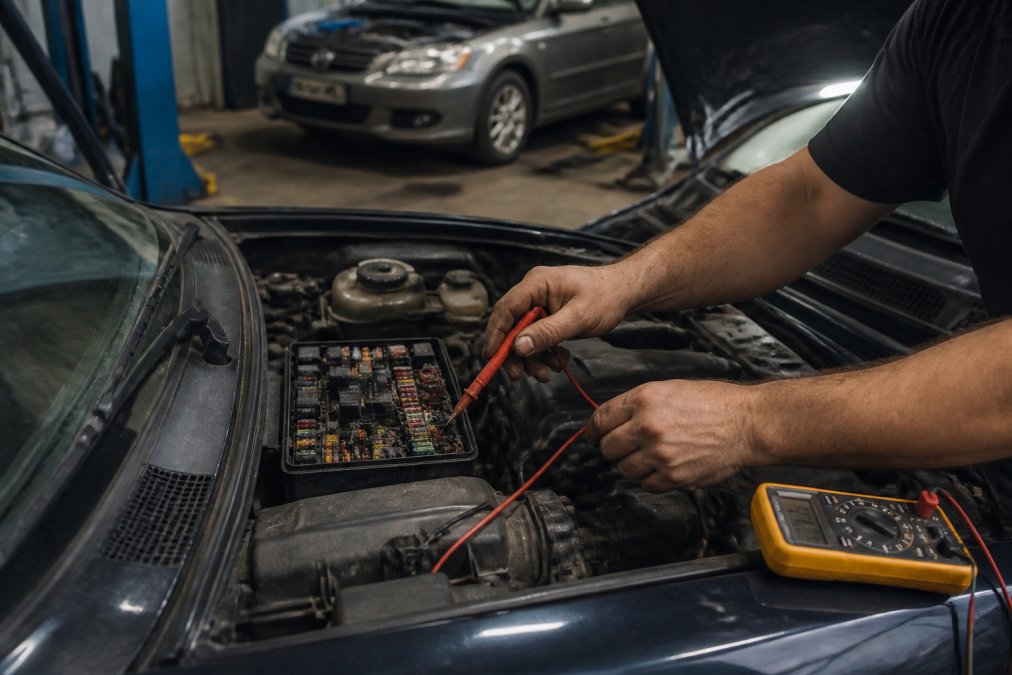
Electrical system failures are the most frequent problem in luxury European vehicles. European cars use complex CAN bus networks where a single faulty sensor triggers check engine lights pointing to the wrong component. Shops without precision diagnostics replace expensive parts chasing symptoms instead of finding root causes.
Automatic transmissions in BMWs, Audis, and Mercedes are electronically controlled units with complex learning algorithms. Improper fluid specification or procedures damage adaptive logic, causing harsh shifting and premature failure. This expensive repair is often preventable with proper maintenance.
Brake servicing requires understanding advanced systems. Many models use carbon-ceramic rotors with matched pad compounds. Wrong brake fluid or pad compounds damage the entire brake system. Precision diagnostics identify wear before emergency repairs become necessary.
Wheel alignment and tire pressure monitoring systems are more complex in European vehicles. Suspension geometry has tighter tolerances; misalignment by half a degree shortens tire life by months. Tire pressure integrates with stability control, affecting handling and safety.
Direct injection engines in modern BMWs and Audis are sensitive to fuel quality and carbon buildup. Using lower octane fuel or skipping fuel system cleaning leads to performance loss and increased emissions.
European Car Maintenance Cost vs Dealership: What You Actually Save
Dealerships often have higher labor rates than independent shops.
Independent shops with factory-trained technicians can offer honest pricing. Over vehicle ownership, honest recommendations add up to significant savings.
OEM parts cost more at dealerships, but for critical components like transmission fluid, fuel filters, and engine coolant, OEM parts are worth the cost. Aftermarket parts on luxury European vehicles are false economy.
Real savings come from preventing expensive repairs. A transmission serviced properly at 40,000 miles lasts significantly longer. Unserviced transmissions can fail prematurely and be expensive to rebuild.
The Role of OEM Parts and Precision Diagnostics
OEM parts are manufactured to exact specifications that match your vehicle's engineering. They're not just "the same thing" as aftermarket alternatives, they're built to tolerances measured in thousandths of an inch. When you replace a fuel injector, an OEM part has been calibrated to spray fuel in a precise pattern that matches your engine's combustion chamber design. An aftermarket fuel injector might spray slightly differently, causing incomplete combustion and reduced performance.
Precision diagnostics separate expert shops from general repair facilities. A factory-trained technician with the correct diagnostic software can read your vehicle's control modules and identify exactly what's failing, not guess based on symptoms. European vehicles store detailed diagnostic trouble codes that only specialized software can decode. When your check engine light comes on, a general shop's basic scanner might show a generic code. Euro Specialist's advanced diagnostic software reveals the actual component failure, the root cause, and the correct repair.
The investment in diagnostic equipment is substantial. Factory-authorized diagnostic software costs thousands of dollars per year in licensing fees. Specialized equipment for European vehicles, transmission programmers, module programmers, fuel system diagnostic tools, requires ongoing training and certification to use correctly. A shop that invests in this equipment is demonstrating commitment to precision diagnostics and proper repairs.
Component longevity depends directly on using correct parts and proper procedures. A transmission that receives OEM fluid at correct intervals lasts significantly longer than one serviced with generic fluid. An engine that receives OEM oil filters and the correct oil specification runs cleaner and lasts longer than one serviced with cheaper alternatives. These aren't marketing claims, they're engineering facts built into how European vehicles are designed.
Warranty Preservation and DIY vs Professional Maintenance Thresholds
Your warranty is only as good as your service records. Manufacturers require that scheduled maintenance be performed at authorized dealers or shops that use OEM parts and follow documented procedures. If you skip a scheduled service or use aftermarket parts, you've potentially voided warranty coverage on components affected by that service. A warranty claim denial can cost you thousands of dollars on a repair that would have been covered.
DIY maintenance on luxury European vehicles works for very specific tasks only. Changing your own oil is fine, as long as you use the correct OEM oil specification, the correct filter, and document the service. Replacing cabin air filters or engine air filters is straightforward and warranty-safe. Topping off washer fluid or checking tire pressure is obviously fine. Everything beyond these basic tasks requires factory-trained technicians and proper documentation to preserve warranty coverage.
The threshold where DIY becomes dangerous is electrical work, fluid services, and anything requiring calibration or programming. Replacing brake pads yourself might seem simple, but if you don't use OEM pads matched to your specific brake system, you've compromised braking performance and voided warranty coverage on brake components. Attempting transmission fluid service without the correct procedure and fluid specification will damage your transmission, and your warranty won't cover damage caused by improper service.
Many owners don't realize that warranty preservation requires more than just using OEM parts, it requires documented proof that maintenance was performed correctly. A receipt from Euro Specialist showing OEM parts, correct service intervals, and proper procedures protects your warranty. A DIY oil change without documentation creates a gap in your service history that manufacturers use to deny warranty claims on unrelated components.
Professional maintenance thresholds should be your default assumption.
Your Preventative Maintenance Checklist for European Luxury Cars
A preventative maintenance checklist for European luxury cars should be based on your vehicle's specific manufacturer schedule, not generic intervals. However, these are the critical services that every European luxury car owner should monitor:
| Service | Interval | Priority | Why It Matters |
|---|---|---|---|
| Oil and filter change | 10,000-15,000 miles | Critical | Protects engine, warranty-required |
| Brake fluid inspection | 12,000-24,000 miles | High | Hygroscopic fluid absorbs moisture, affects braking |
| Transmission fluid service | 40,000-60,000 miles | Critical | Prevents transmission failure, most expensive repair |
| Coolant system inspection | 24,000-36,000 miles | High | Prevents overheating, protects aluminum components |
| Wheel alignment check | 24,000-36,000 miles | Medium | Prevents tire wear, maintains handling |
| Spark plugs inspection | 30,000-50,000 miles | Medium | Performance monitoring, warranty compliance |
| Fuel system cleaning | 40,000-60,000 miles | Medium | Prevents carbon buildup, maintains efficiency |
| Battery health check | 36,000-48,000 miles | Medium | Luxury cars have complex electrical demands |
Frequently Asked Questions
How often should I service my luxury European car?
Service intervals for luxury European vehicles typically range from 10,000 to 15,000 miles or annually, depending on the manufacturer and model year. Factory-trained technicians follow manufacturer specifications that account for your vehicle's precision engineering. Check your owner's manual for exact intervals, as newer models may have condition-based service schedules that monitor fluid quality and component wear. Skipping scheduled maintenance can void your warranty and compromise engine performance.
What's the difference between European car maintenance cost vs dealership service?
Specialized repair shops typically offer competitive pricing on routine maintenance while maintaining the same technical standards as dealerships. The key difference lies in overhead costs. A factory-trained technician at a specialized shop can perform the same brake servicing, fluid flushing, and electrical diagnostics without the markup. You'll receive honest pricing on preventative care without pressure to upsell unnecessary services.
Should I use OEM parts or aftermarket alternatives for my European luxury car?
OEM parts are engineered to exact manufacturer specifications and ensure component longevity and warranty compliance. Aftermarket parts may cost less initially but can compromise precision diagnostics, engine performance, and resale value. For critical systems like transmission service, powertrain components, and electrical systems, OEM parts protect your investment. Aftermarket options may work for wear items like wiper blades, but consult a specialist before substituting on critical repairs.
Can I do some maintenance myself, or should everything go to a professional?
Basic tasks like checking tire pressure monitoring systems, topping fluid levels, and replacing air filters are DIY-friendly. However, European vehicles require professional attention for diagnostics, wheel alignment, brake servicing, and electrical work. Modern luxury cars rely on advanced technology and technical bulletins that demand specialized repair expertise. A factory-trained technician can identify issues a DIY approach might miss, preserving your vehicle's health and resale value.