 comparison
European Auto Repair Shop Reviews 2026
Table of Contents
- What Makes a Trustworthy European Auto Repair Shop
- How to Verify a Master-Certified Mechanic
- Questions to Ask an Auto Repair Shop
- How to Compare Auto Repair Estimates
- European Car Repair Costs: What You Should Expect
- Reading and Evaluating European Auto Repair Shop Reviews
- Dealership vs. Independent European Repair Specialists
- Frequently Asked Questions
Last Updated: October 16, 2026
What Makes a Trustworthy European Auto Repair Shop
Finding a trustworthy European auto repair shop means looking beyond flashy marketing and focusing on verifiable credentials, transparent practices, and honest customer feedback. At Euro Specialist, we understand that European vehicle owners need specialized expertise, and they deserve transparency about pricing, timelines, and the qualifications of the technicians working on their cars.
A trustworthy European auto repair shop demonstrates several core qualities: master-certified technicians who specialize in European makes, clear communication about what's being repaired and why, honest pricing without hidden fees, and a warranty backing all work performed. The best shops also maintain strong online reviews that reflect real customer experiences across multiple platforms.
The difference between a shop you can trust and one that will leave you frustrated often comes down to how they handle the basics. Do they explain what's wrong before they start work? Do they show you the damaged part? Can they answer technical questions about your specific vehicle?
When evaluating European auto repair shop reviews, look for patterns in customer feedback rather than isolated comments. A shop with 50 reviews averaging 4.7 stars tells a clearer story than one with five perfect reviews. Pay attention to comments about pricing accuracy, did customers feel they got what they paid for? Did promised completion dates hold up?
How to Verify a Master-Certified Mechanic
A master-certified mechanic holds credentials that prove formal training, hands-on experience, and ongoing competency in automotive repair. The most widely recognized certification in the United States is ASE (Automotive Service Excellence), which requires technicians to pass rigorous exams and maintain their certifications through continuing education (About ASE).
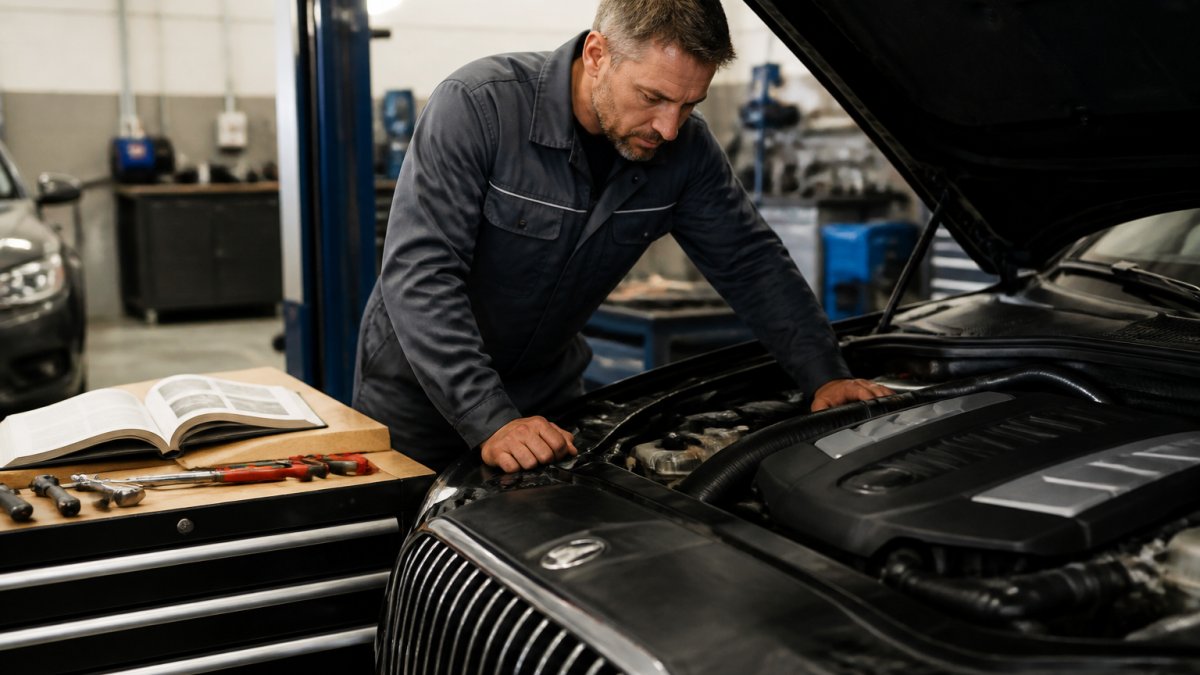
When you're researching a European auto repair shop, ask directly: Which certifications do your technicians hold? For European specialists, look for additional certifications specific to brands like BMW, Mercedes-Benz, Audi, or Porsche, these indicate deeper expertise with those manufacturers' unique systems.
You can verify ASE certifications through the official ASE website. Ask the shop for proof, not just their word. A legitimate shop won't hesitate to show you technician credentials or explain the difference between a general ASE technician and a master-certified specialist.
Beyond formal certifications, consider how many European vehicles they service monthly. They've also invested in the specialized diagnostic equipment that European vehicles require, equipment that costs thousands of dollars and signals real commitment to the specialty.
Questions to Ask an Auto Repair Shop
Before you commit to any work, ask these questions to understand how the shop operates and whether they'll treat your vehicle with the care it deserves.
What's your diagnostic process? A good shop runs a full diagnostic before giving you an estimate. They should explain what tools they're using, what they found, and why they believe a specific repair is necessary.
Can you show me the damaged part? For any repair beyond routine maintenance, ask to see the failed component.
What's included in your estimate? A transparent estimate lists labor hours, parts costs, and any shop fees separately. It should also note what's included in your warranty, does it cover parts, labor, or both? For how long?
How long will the repair take? Get a specific timeframe. "A few days" is too vague. "We'll have it ready by Thursday at 3 PM" is what you want.
Do you use OEM or aftermarket parts? OEM (original equipment manufacturer) parts are made by the car's manufacturer. Aftermarket parts are made by third parties and often cost less.
What's your warranty on this repair? A shop standing behind its work offers at least a 12-month warranty on labor and parts. Some offer longer.
How to Compare Auto Repair Estimates
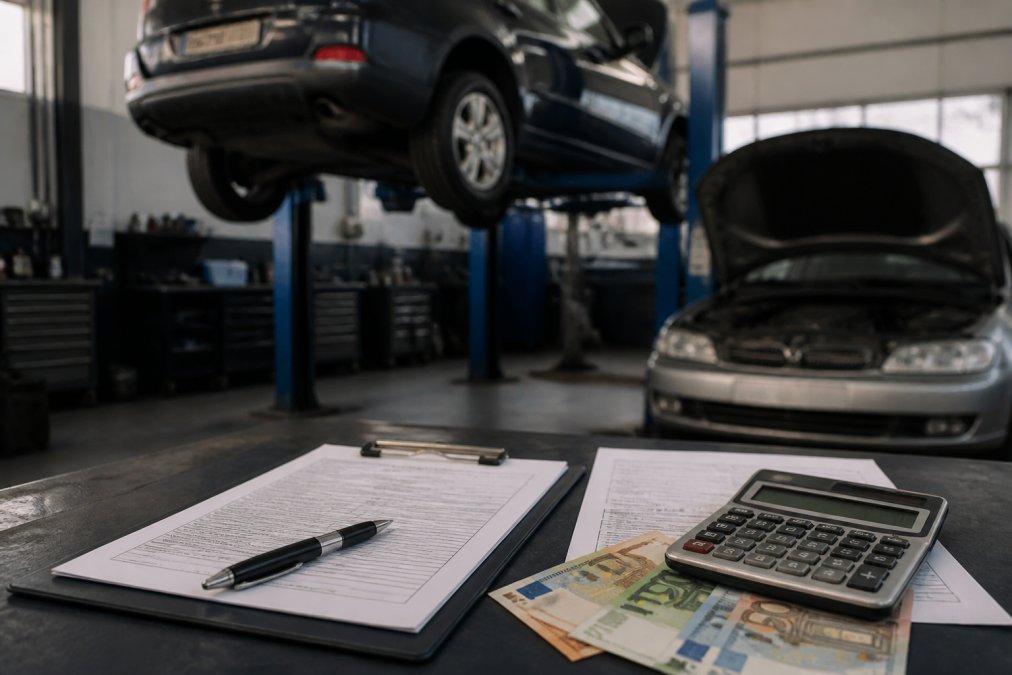
Getting multiple estimates is standard practice and protects you from overpricing. When comparing estimates for the same repair across different shops, focus on what's actually being quoted, not just the total price.
Legitimate estimates from different shops may vary in price, but they should describe the same repair. If one shop quotes $800 and another quotes $1,200 for the same brake service, the difference might reflect labor rates, parts quality, or shop overhead. But if the descriptions don't match, one includes new rotors and the other doesn't, you're not comparing the same thing.
Look for these details in every estimate:
- Exact parts being replaced (brand, part number if possible)
- Labor hours and the shop's hourly rate
- Warranty terms on parts and labor
- Timeline for completion
- Any additional services they recommend and their cost
A common mistake is choosing the cheapest estimate without understanding what you're getting. A $400 oil change at a dealership versus a $40 oil change at a quick-lube shop reflects different service levels, the dealership uses OEM filters and fluid, checks other systems, and stands behind the work with a longer warranty. Neither is inherently wrong; they're different products.
For complex repairs, transmission work, engine diagnostics, electrical system repairs, get at least two estimates. For routine maintenance, one estimate from a trusted shop is usually sufficient. The act of getting multiple quotes also signals to shops that you're a careful customer, which sometimes encourages them to be more competitive on pricing.
European Car Repair Costs: What You Should Expect
European vehicles cost more to repair than domestic cars, and understanding why helps you make informed decisions about maintenance and repair shops.
European manufacturers engineer their vehicles to exacting standards. This means parts are often more specialized, diagnostic equipment must be more sophisticated, and technicians need deeper training.
Routine maintenance on European vehicles, oil changes, filter replacements, fluid top-ups, typically costs more than equivalent services on domestic cars, but the intervals are often longer.
Repair costs vary dramatically by the specific issue. A brake pad replacement might cost $400-$600 at an independent European specialist versus $800-$1,200 at a dealership. An electrical diagnostic, often necessary for European vehicles with complex computer systems, might run $150-$300 depending on the shop's rates and the complexity of the problem.
The biggest cost difference between dealerships and independent European specialists comes down to labor rates. For a four-hour job, that difference can add up significantly. Both can deliver quality work; the difference is primarily overhead and brand markup.
When budgeting for European vehicle ownership, plan for higher maintenance and repair costs than you'd expect for a domestic vehicle. The good news: choosing an honest, competent independent shop like Euro Specialist instead of a dealership can significantly reduce those costs without sacrificing quality.
Reading and Evaluating European Auto Repair Shop Reviews
Online reviews are valuable, but not all reviews tell the full story. Learning to read reviews critically helps you separate genuine feedback from outliers.
Start by looking at the total number of reviews and the overall rating. A shop with 100 reviews averaging 4.6 stars has a more reliable reputation than one with eight reviews and a 5.0 rating.
Pay attention to review patterns rather than individual comments. If 80% of reviews mention "honest pricing" and "fair estimates," that's a real strength. If one review mentions "overpriced" and 90 others don't, it's likely an outlier.
Read the negative reviews carefully. How the shop responds matters as much as the complaint itself. A shop that dismisses criticism or makes excuses is less trustworthy than one that acknowledges the problem and explains how they've addressed it.
Look for reviews that mention specific repairs and outcomes. "Fixed my electrical issue and it's been working perfectly for six months" is more useful than "Great service." Specific reviews give you confidence that the shop can handle the type of repair you need.
Check multiple review platforms, Google, Yelp, Trustpilot, CARFAX, to see if the pattern holds. A shop with a 4.8 rating on Google but poor reviews on Yelp might be gaming one platform. Consistent ratings across platforms indicate genuine customer satisfaction.
Dealership vs. Independent European Repair Specialists
The choice between a dealership and an independent European repair specialist comes down to cost, convenience, warranty considerations, and the specific repair needed.
Dealerships offer:
- Factory-trained technicians with deep knowledge of your specific vehicle model
- OEM parts with full manufacturer backing
- Warranty coverage that protects your vehicle's manufacturer warranty (important if your car is still under warranty)
- Comprehensive diagnostic equipment specific to your vehicle
- Convenience of service at the brand's facility
Dealerships cost more because:
- Higher labor rates ($120-$180+ per hour)
- Markup on parts
- Higher overhead
- Brand reputation premium
Independent European specialists like Euro Specialist offer:
- Lower labor rates ($80-$120 per hour typically)
- Personalized service and direct communication with the technician
- Flexibility on parts (OEM or quality aftermarket)
- Specialized expertise across multiple European makes
- Warranty on work performed
The key decision point: Is your vehicle still under the manufacturer's warranty? If yes, use the dealership for major repairs. Dealership service maintains your warranty coverage. If your vehicle is out of warranty, an independent specialist often delivers the same quality work.
For routine maintenance, oil changes, filter replacements, fluid top-ups, an independent specialist is almost always the better value. For complex electrical diagnostics or major repairs on an out-of-warranty vehicle, compare estimates from both. For warranty work or recalls, the dealership is your only option.
| Service Type | Dealership | Independent Specialist |
|---|---|---|
| Routine maintenance | Higher cost | Lower cost, same quality |
| Warranty work | Required | Cannot perform |
| Complex diagnostics | Excellent for your model | Excellent across European makes |
| Parts sourcing | OEM only | OEM or quality aftermarket |
| Labor rate | $120-$180/hour | $80-$120/hour |
| Warranty on work | Varies | Typically 12+ months |
Choosing the right European auto repair shop comes down to verifying expertise, understanding costs, and trusting customer feedback. Master-certified technicians, transparent estimates, and consistent positive reviews are the markers of a trustworthy shop. Whether you choose a dealership for warranty work or an independent specialist for ongoing maintenance, ask the right questions and compare estimates before committing. At Euro Specialist, we believe European vehicle owners deserve honest, expert service backed by certified technicians and a warranty on all our work. Schedule an appointment to experience the difference specialized expertise makes.
Frequently Asked Questions
What should you look for in European auto repair shop reviews?
Look for specific details about repair quality, workmanship, and staff knowledge rather than vague praise. Verify review counts and ratings across multiple platforms. Pay attention to how shops handle warranty claims and resolve disputes. Check whether reviewers mention their specific vehicle make and repair type, which indicates the shop's actual experience with your car. Honest reviews often mention both strengths and minor weaknesses, which signals authenticity.
How do you verify a master-certified mechanic?
Ask the shop for documentation of ASE (Automotive Service Excellence) certification, which is the industry standard for technician qualification. Request proof that technicians hold current certifications specific to European vehicle makes. Verify certifications directly through the ASE website rather than relying solely on shop claims. Ask how long technicians have worked with your specific vehicle brand. Master-certified status means passing multiple ASE exams and maintaining ongoing education, so legitimate shops will provide verifiable proof without hesitation.
Is an independent European auto repair shop better than a dealership?
Independent European repair specialists often provide more personalized service than dealerships. They maintain technical expertise, especially if staffed with master-certified technicians. Independent shops can use OEM (original equipment manufacturer) parts. However, verify the shop's experience with your specific European make and ask about warranty coverage on repairs. The best choice depends on your vehicle's age, warranty status, and repair complexity.
How do you tell if a mechanic is ripping you off?
Compare estimates from at least two qualified shops before authorizing work. Watch for pressure to perform unnecessary repairs or upsells that weren't part of your original request. Ask the mechanic to explain why each repair is needed and what happens if you delay it. Request an itemized estimate showing parts, labor hours, and total cost. Be skeptical of shops that diagnose major problems without thorough diagnostic testing. Honest shops provide transparent estimates, explain their reasoning, and answer questions about repair necessity without pressure.