 comparison
European Car Maintenance: Dealership vs. Independent
Table of Contents
- Why European Car Maintenance Costs More
- Dealership vs. Independent Mechanic: Cost and Service Breakdown
- OEM vs. Aftermarket Parts for European Cars
- Understanding European Car Service Intervals
- The Magnuson-Moss Warranty Act Explained
- How to Manage Long-Term Maintenance Costs
- Common Misconceptions About European Car Service
- Frequently Asked Questions
Last Updated: September 25, 2026
Why European Car Maintenance Costs More
European vehicles demand specialized attention due to engineering complexity, precision manufacturing, and proprietary systems that create higher european car maintenance cost, a trade-off for performance and durability.
European cars rely on advanced electronic control units, turbocharged engines, and integrated diagnostic systems requiring specialized training. A routine oil change might involve software resets that general mechanics cannot perform. Diagnostic tools cost thousands, which shops pass along in service fees.
Labor rates reflect expertise. A technician certified to work on European vehicles has invested significantly more in training and equipment than a generalist. According to Bureau of Labor Statistics occupational data, specialized automotive technicians earn 20-30% more than general mechanics, and those costs appear in your repair bill.
OEM components engineered for European specifications cost more than domestic equivalents. Some parts ship from overseas, adding lead time and logistics costs.
Dealership vs. Independent Mechanic: Cost and Service Breakdown
Dealerships typically charge 15-40% more per labor hour than independent shops. Understanding what you get for that premium matters more than the headline number.
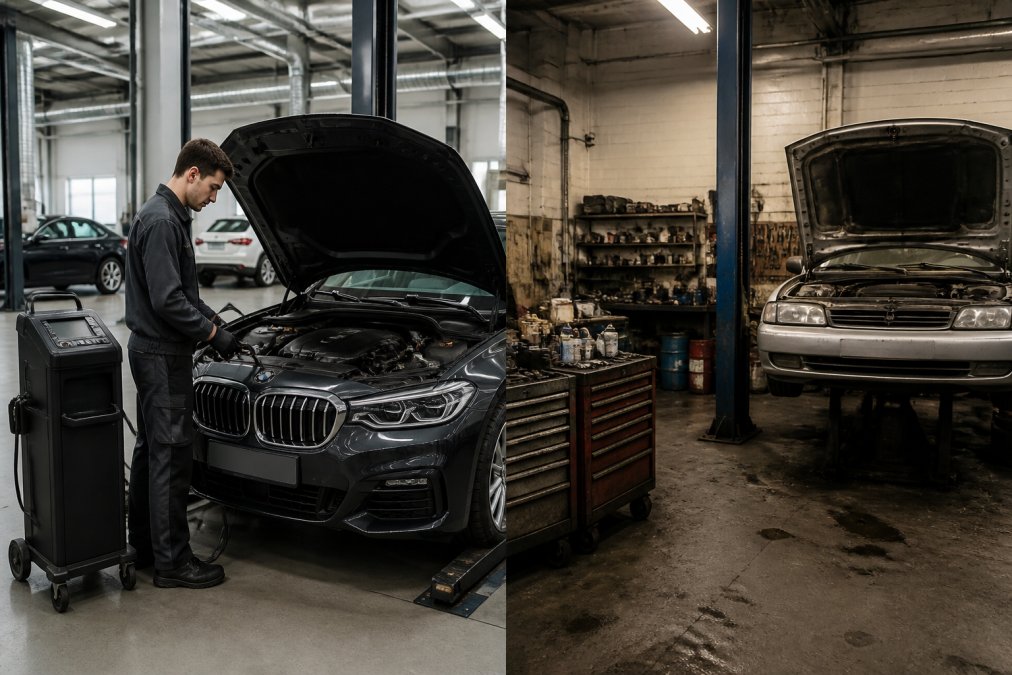
Dealership advantages:
- Factory-trained technicians with access to manufacturer technical bulletins
- Genuine OEM parts with full warranty coverage
- Latest diagnostic software matching your vehicle's year and model
- Direct manufacturer support for recalls and known issues
- Service records maintained in manufacturer database
Independent shop advantages:
- Lower labor rates due to reduced overhead
- Flexibility on parts sourcing (OEM or quality aftermarket options)
- Often more personalized service and relationship-focused care
- Faster appointment scheduling
- Ability to negotiate pricing on non-warranty work
For complex diagnostics, dealerships with factory software identify electronic issues in minutes; independent shops may require trial-and-error troubleshooting. For routine maintenance, oil changes, filter replacements, brake service, independent shops deliver comparable quality at lower cost.
If your vehicle is under manufacturer warranty, dealership service is often required to maintain coverage. Once warranty expires, independent shops become viable for most work with certified technicians.
OEM vs. Aftermarket Parts for European Cars
The parts decision affects reliability and resale value. OEM parts are manufactured to exact specifications; aftermarket parts vary widely in quality.
OEM parts benefits:
- Engineered for your specific vehicle model
- Guaranteed compatibility with integrated systems
- Full manufacturer warranty
- Documented service history supports resale value
- Critical for electronic components and sensors
Aftermarket parts considerations:
- Significant cost savings (30-60% less than OEM)
- Quality ranges from excellent to poor depending on manufacturer
- May void warranty on related components
- Some parts (spark plugs, filters, brake pads) perform identically to OEM equivalents
- Electronic components and transmission parts carry higher risk
Use OEM parts for electronic sensors, transmission components, and integrated computer systems. Aftermarket options work well for consumables like oil filters, air filters, and brake pads where quality standards are established.
Reputable manufacturers produce quality aftermarket components at lower cost. Your technician's recommendation matters; shops that stand behind their work specify parts they trust.
Understanding European Car Service Intervals
European manufacturers design service intervals around synthetic oils and advanced filtration systems, but intervals vary significantly by brand, model tier, and engine type, a critical detail most owners miss when budgeting maintenance.
Entry-level European models (Volkswagen Jetta, Audi A3, BMW 3-Series base models) follow 10,000-mile or 12-month intervals. A routine oil service costs $80-150 at independent shops; $150-250 at dealerships.
Mid-range and performance models (Audi A4/A6, BMW 5-Series, Mercedes-Benz C-Class) extend intervals to 15,000 miles or 12 months with more complex systems. Oil service costs $120-200 at independent shops; $200-350 at dealerships. These models require more frequent cabin air filter replacements and brake fluid flushes.
Luxury and high-performance models (BMW M-Series, Mercedes-AMG, Audi RS models) advertise 15,000-20,000-mile intervals but real-world driving often triggers more frequent service. Turbocharged variants require carbon cleaning every 40,000-60,000 miles. Oil service costs $200-400 at independent shops; $350-600 at dealerships. Transmission fluid flushes cost $400-800.
Diesel European vehicles (Volkswagen TDI, BMW diesel, Mercedes diesel) specify 10,000-mile oil changes because diesel fuel contains more contaminants. Fuel filter changes every 20,000-30,000 miles add $150-250 per service.
Skipping scheduled maintenance compounds by model tier. Deferring service on high-performance turbocharged engines accelerates carbon buildup and can trigger limp-mode warnings requiring dealership diagnostics ($150-300). Transmission fluid breakdown leads to eventual failure, a $4,000-8,000 repair preventable by a $500 fluid flush.
Detailed service records protect resale value. Used European vehicles with complete records command a 10-15% premium; for luxury models, this premium often exceeds $3,000-5,000.
Use your vehicle's onboard computer or manufacturer mobile apps (Volkswagen Connect, BMW Connected, Mercedes me) to track service intervals and maintain digital records.
The Magnuson-Moss Warranty Act Explained
The Magnuson-Moss Warranty Act prevents manufacturers from voiding warranty based on independent shop service. The requirement: use OEM or equivalent-quality parts and perform work correctly.
What this means practically:
- You can use independent shops without losing warranty coverage
- Manufacturers cannot require dealership service as a warranty condition
- Dealers must prove that independent service caused the specific failure to deny a claim
- Using quality aftermarket parts does not automatically void warranty
Dealers sometimes imply independent service voids warranty. They can deny a claim only if they prove the independent shop's work caused the failure. Routine oil changes at independent shops do not void warranty.
Maintain detailed service records, what was done, what parts were used, and who performed the work, to protect yourself in warranty disputes.
How to Manage Long-Term Maintenance Costs
Strategic planning reduces total cost of ownership for European vehicles by accounting for DIY tasks, location, and model tier, variables creating 30-50% cost variance.
Several routine tasks are safe for competent DIYers with basic tools, dramatically reducing annual costs.
Safe DIY tasks on most European vehicles:
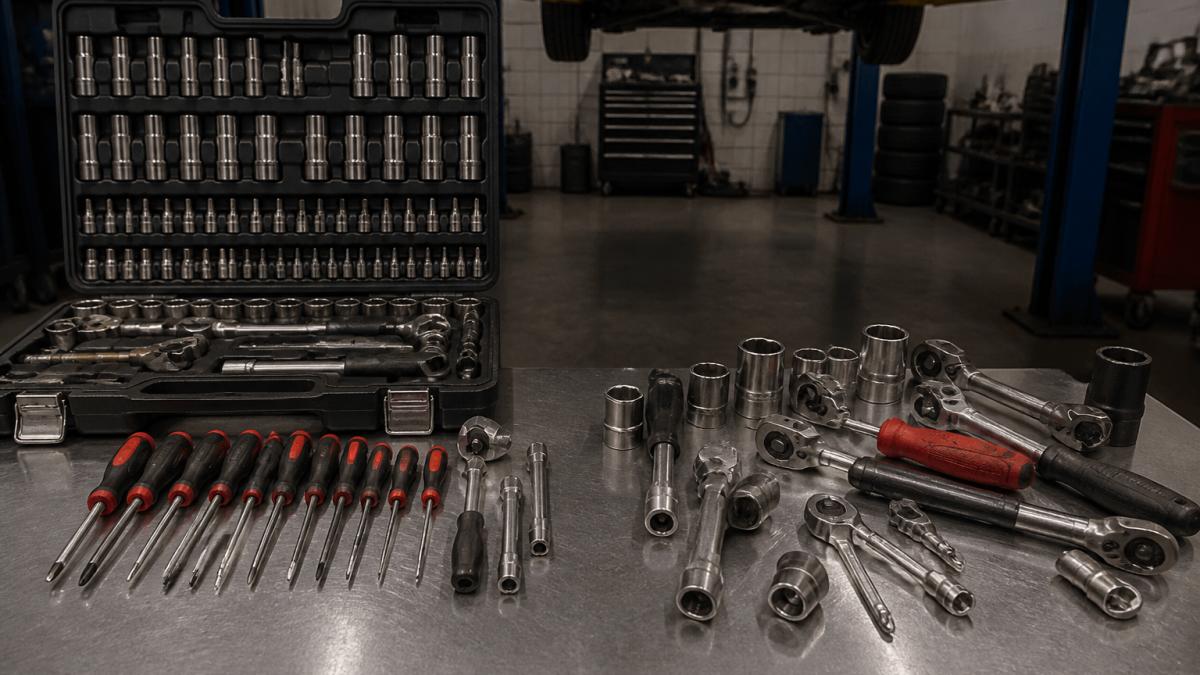
- Oil and filter changes ($40-80 in parts vs. $150-350 at a shop). Requires an oil drain pan, wrench set, and oil filter socket.
- Air filter replacement ($20-40 in parts vs. $80-150 at a shop). Engine and cabin air filters involve unclipping a cover and sliding out the old filter.
- Wiper blade replacement ($15-30 in parts vs. $40-80 at a shop). Straightforward on most models.
- Brake pad inspection and replacement (DIY: $80-150 in pads vs. shop: $300-600). Requires a jack, jack stands, socket set, and brake cleaner. Warning: Do not attempt if unfamiliar with brake systems.
- Spark plug replacement (DIY: $30-80 in plugs vs. shop: $200-400). Varies by model; check your specific model's difficulty rating before attempting.
Tasks to avoid as a DIYer:
- Transmission fluid flushes (requires specialized equipment and knowledge of fill levels)
- Coolant system work (risk of air locks and overheating)
- Electrical diagnostics (requires factory software and training)
- Suspension work (safety-critical; improper alignment causes tire wear and handling issues)
- Fuel system service (fire hazard)
Labor rates vary dramatically by geography. Urban areas with high concentrations of European imports have competitive independent shops; rural areas have limited options and higher rates.
Typical labor rates by region:
- Urban centers (Boston, New York, Los Angeles, Seattle): Independent shops charge $90-130/hour; dealerships charge $150-200/hour.
- Suburban areas: Independent shops charge $100-140/hour; dealerships charge $160-210/hour.
- Rural areas: Independent shops charge $110-160/hour (fewer options, longer parts sourcing); dealerships charge $170-230/hour.
A transmission fluid flush costs $180-260 in urban shops but $220-320 in rural shops, a 40% difference. Rural residents should consider traveling to nearby cities for major service or building relationships with mail-order suppliers.
Budget by model tier: entry-level costs 15-20% more annually than domestic vehicles; mid-range costs 25-35% more; luxury and performance cost 40-60% more.
- Entry-level (Volkswagen Jetta, Audi A3, BMW 320i): Budget $1,200-1,800 annually for maintenance and repairs.
- Mid-range (Audi A4, BMW 5-Series, Mercedes C-Class): Budget $1,800-2,800 annually.
- Luxury/performance (BMW M, Mercedes-AMG, Audi RS): Budget $2,500-4,500 annually, plus $1,000-2,000 for specialty work like carbon cleaning every 40,000 miles.
These figures assume preventative maintenance. A transmission fluid flush ($600-1,200) or failed turbocharger ($2,000-4,000) can exceed annual budgets quickly.
Set aside monthly funds based on model tier and annual mileage. For 15,000 miles annually in a mid-range vehicle, allocate $150-230 monthly. Use a dedicated account to track spending.
Address small issues before they compound. A worn serpentine belt costs $200-400 to replace; allowing it to break damages the water pump and alternator, turning a $300 repair into a $1,200 one.
Track service intervals closely using digital tools. Use your vehicle's onboard computer or manufacturer app to monitor maintenance due dates. Most European vehicles display service reminders 500 miles before the interval. Missing a service by a few hundred miles is unlikely to cause problems. Consistently deferring service for months or years creates cumulative damage that erodes reliability and resale value.
Build a relationship with a trusted shop. Whether dealership or independent, consistency matters.
Common Misconceptions About European Car Service
Several myths persist about European vehicle maintenance, leading owners to make poor decisions.
Frequently Asked Questions
Are European cars more expensive to maintain than domestic vehicles?
Yes. European car maintenance typically costs 10-30% more than domestic vehicles due to specialized parts, proprietary software, and the mechanical complexity of European engineering. Labor rates for European car service intervals are higher because technicians require advanced training and specialized diagnostic tools. However, preventative maintenance and choosing an independent specialist with expertise in your make can reduce long-term costs significantly compared to dealership service.
Does using an independent mechanic void my European car's warranty?
No. The Magnuson-Moss Warranty Act protects your right to use independent repair facilities without voiding factory warranty coverage. Dealers cannot require you to use their service for warranty coverage unless they provide the service free of charge. However, you must follow the manufacturer's maintenance schedule and use OEM parts or equivalent quality components. Keep detailed service records to document compliance with scheduled service intervals and demonstrate proper care.
What should I look for when choosing an independent European auto specialist?
Verify that technicians hold master-certified credentials specific to European makes and that the shop maintains current technical bulletins from manufacturers. Ask about their experience with your specific vehicle model and their approach to diagnostics, specialists should use proprietary software and advanced diagnostic tools rather than guessing. Confirm that all work is warrantied, and request itemized repair bills that show parts sourcing and labor rates. Check reviews from long-term customers and ask how they handle complex electrical or mechanical issues.
How much can I save by using an independent mechanic instead of a dealership?
Labor rates at independent shops can be lower than dealership rates, though exact savings depend on the repair type and your location. Savings vary by vehicle model tier and the specific work required. Contact Euro Specialist or a trusted local specialist for a quote on your vehicle's maintenance needs to compare pricing directly.