 listicle
BMW Engine Repair: Expert Shops & Services
Table of Contents
- Why BMW Engine Repair Requires Specialized Expertise
- Common BMW Engine Problems and When to Seek Help
- Dealership vs. Independent BMW Mechanic: What You Need to Know
- What's Included in a Professional BMW Engine Diagnostic
- Planning Your BMW 100,000 Mile Service Cost and Maintenance
- How to Choose the Right Shop for Your BMW Engine Repair
- Conclusion
- Frequently Asked Questions
Last Updated: October 1, 2026
Why BMW Engine Repair Requires Specialized Expertise
BMW engine repair demands factory-trained technicians who understand precision components, advanced fuel injection systems, and computer-controlled timing chains. A misdiagnosis can cost thousands in unnecessary work or leave you stranded with an undiagnosed check engine light.
When your BMW throws a code, it could signal a timing chain issue, turbocharger problem, or sensor calibration drift that only shows up under specific driving conditions. Master-certified technicians who work exclusively with European vehicles understand these nuances and stay current on BMW's engineering changes.
Dealership pricing reflects overhead and corporate margins. Independent shops with genuine BMW expertise deliver the same quality diagnostics and repairs at lower cost if they invest in diagnostic scan tools, OEM parts compatibility, and experienced technicians.
Common BMW Engine Problems and When to Seek Help
Timing Chain Stretch and Tensioner Wear (2006-2015 N52 and N54 engines) The N52 and N54 engines (2006-2015) use timing chains that can stretch due to BMW's original tensioner design. Symptoms include metallic rattle on cold startup, rough idle, or code P0016. A diagnostic scan is urgent; a stretched timing chain can cause catastrophic damage. Catching it early prevents complete engine rebuild.
High-Pressure Fuel Pump Failure (2011-2019 N20 and N26 turbocharged engines) The N20 and N26 engines (2012-2019) suffer from premature fuel pump wear due to high-pressure direct injection (2,000+ psi). Symptoms include difficulty starting, rough idle, hesitation, or code P0087. This typically emerges between 60,000-100,000 miles. The updated pump design is more durable.
Valve Cover Gasket Leaks (2000-2020 all inline-six and V8 models) Valve cover gasket leaks emerge around 80,000-120,000 miles, causing oil pooling, burning smell, or residue on spark plug wells. Ignoring it increases fire risk. Replacement should be done at the 100,000-mile service.
Water Pump Failure (2003-2018 all models) BMW water pumps typically fail between 80,000-120,000 miles. Warning signs include coolant leaks, overheating, or sweet-smelling coolant odor. Failure can quickly lead to head gasket damage. Catching it early prevents a head gasket repair.
Carbon Buildup on Intake Valves (2006-2020 direct-injection engines) Direct-injection engines accumulate carbon on intake valves between 60,000-100,000 miles, causing rough idle, hesitation, reduced fuel economy, or misfire codes. Preventative fuel system cleaning every 50,000 miles can delay or prevent this issue.
Check Engine Light and Oxygen Sensor Drift (all model years) Check engine lights often signal oxygen sensor drift (codes P0130-P0139), typically between 80,000-150,000 miles. A diagnostic scan reveals the exact fault. Ignoring it can damage your catalytic converter.
Engine Misfire Under Load (2010-2020 turbocharged engines) Misfires on turbo engines stem from carbon buildup, failing ignition coils, or fuel injector degradation. A diagnostic scan pinpoints the cause. Catching this early prevents catalytic converter damage.
When to Seek Help Immediately Seek immediate diagnostics for: persistent check engine light, metallic rattle on startup, coolant leaks, rough idle after warm-up, or loss of power. A factory-level diagnostic scan identifies the exact issue and prevents guesswork repairs.
Dealership vs. Independent BMW Mechanic: What You Need to Know
Dealership service centers have direct access to BMW's latest technical bulletins and handle warranty work. However, dealership labor rates run 30-50% higher than independent shops for identical work.
Independent BMW specialists invest in the same diagnostic equipment and stock OEM parts with master-certified technicians. Lower overhead means more competitive pricing and personalized attention.
For routine maintenance, either option works. For complex engine diagnostics or timing chain work, choose a technician with deep BMW-specific experience. Independent shops with genuine expertise deliver the same quality at better value.
For BMWs past three years old and out of manufacturer coverage, specialized independent shops deliver better value without sacrificing quality.
Trustworthy independent shops have master certifications, warranty on all work, transparent pricing before repairs, and willingness to show diagnostic results.
What's Included in a Professional BMW Engine Diagnostic
A proper BMW engine diagnostic uses advanced computer diagnostics that communicate directly with your BMW's onboard systems, reading live data streams that reveal what the engine is actually doing in real time.
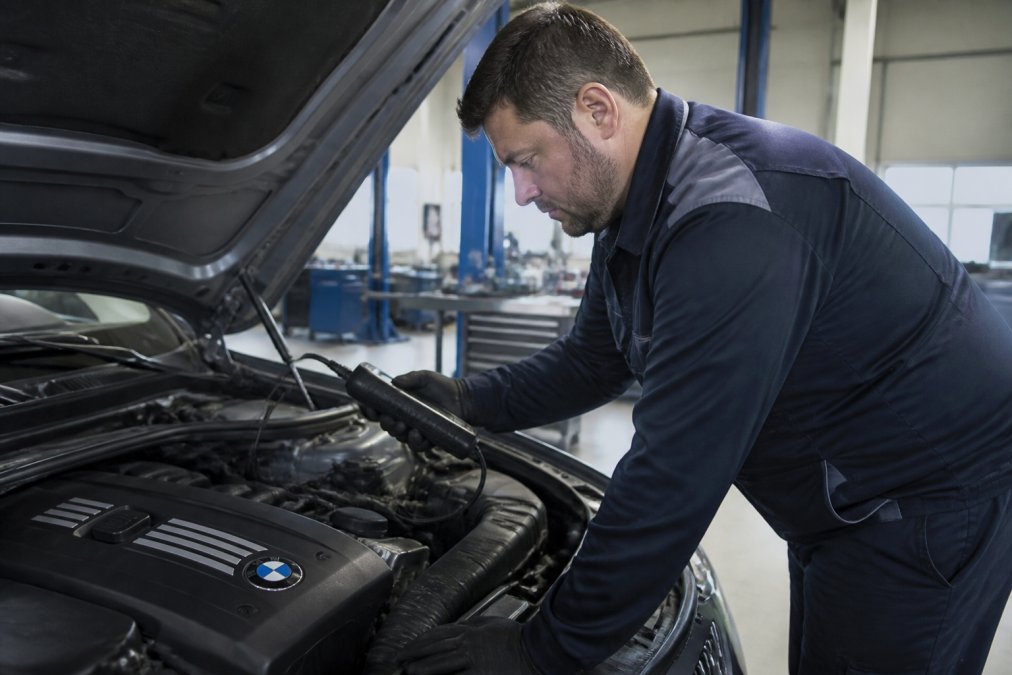
The diagnostic process starts with visual inspection, then the technician connects the diagnostic scanner to pull stored and pending fault codes. Factory-level diagnostics reveal sensor calibration data, fuel injection timing, ignition advance curves, and powertrain performance metrics, far beyond what generic code readers show.
The technician reviews live data while the engine runs under different conditions: idle, acceleration, steady cruising. This reveals whether a misfire happens consistently or only under load, whether a sensor is drifting out of range, or whether the fuel injection system is delivering correct pressure.
You receive a detailed report explaining what was found, what's causing the symptom, repair options, urgency, and whether OEM or quality aftermarket parts are appropriate for your specific repair.
A full diagnostic prevents guesswork repairs that waste money.
Planning Your BMW 100,000 Mile Service Cost and Maintenance
The 100,000-mile service is a critical maintenance checkpoint. Preventative maintenance decisions directly impact whether your BMW remains reliable through 150,000+ miles or begins experiencing expensive failures.
What the 100,000-Mile Service Includes
A complete 100,000-mile service for a BMW typically includes:
- Transmission fluid flush and fill: $300-$600. Removes metal particles and sludge; skipping it accelerates transmission wear.
- Spark plug replacement: $200-$400. Improves cold-start reliability and fuel economy by 5-10%.
- Brake fluid flush: $150-$300. Prevents brake fade during emergency stops.
- Air filters: $100-$250. Clogged filters reduce fuel economy and HVAC efficiency.
- Coolant system flush: $200-$400. Prevents water pump and radiator failures.
- Suspension inspection: $0 for inspection; $400-$1,500 for component replacement if needed.
- Brake pads and rotors: $600-$1,200. Prevents brake fade and caliper damage.
- Fuel system cleaning: $400-$800. Restores fuel economy and throttle response.
Model-Year-Specific Considerations
Service requirements vary significantly by model year and engine type:
- 2006-2010 models (N52, N54 engines): Prioritize timing chain tensioner inspection. If you hear a cold-start rattle, a diagnostic scan is urgent before proceeding with routine service.
- 2011-2015 models (N20, N26 engines): High-pressure fuel pump failure is common at this mileage. Request a fuel pressure diagnostic to confirm pump health. If pressure is below 2,000 psi at idle, replacement is imminent.
- 2016-2020 models (B48, B58 engines): These engines are more robust, but valve cover gasket leaks emerge around 100,000 miles. Budget for replacement if you notice oil leaks.
High-Mileage Maintenance Strategy: 100,000+ Miles
Once your BMW reaches 100,000 miles, shift from factory-recommended intervals to a more aggressive preventative schedule:
- Oil changes every 5,000 miles (instead of 10,000): Synthetic oil degrades faster under high-mileage stress. More frequent changes reduce engine wear and catch developing issues (metal particles in oil indicate bearing wear).
- Transmission fluid inspection every 20,000 miles: Check fluid color and smell. Dark, burnt-smelling fluid indicates accelerated wear; flush immediately rather than waiting for the next scheduled service.
- Coolant system flush every 50,000 miles: High-mileage engines run hotter, and degraded coolant loses corrosion inhibitors faster. More frequent flushes prevent radiator and water pump failures.
- Brake fluid flush every 2 years: Moisture absorption accelerates at higher mileage. Annual or biennial flushes maintain braking performance and prevent corrosion inside brake lines.
- Suspension and steering inspection every 20,000 miles: High-mileage vehicles experience accelerated bushing and joint wear. Catching wear early prevents alignment issues and uneven tire wear.
Cost Breakdown for a Comprehensive 100,000-Mile Service
A full 100,000-mile service at an independent BMW specialist depends on what components need replacement:
- Routine items (fluids, filters, spark plugs)
- Brake service (pads and rotors)
- Suspension or steering component replacement (if needed)
- Fuel system cleaning
- Diagnostic scans and inspections
Independent shops with master-certified technicians deliver identical quality at better value.
Preventative Maintenance ROI
Investing in comprehensive 100,000-mile service prevents emergency repairs between 100,000 and 150,000 miles. A timing chain failure, transmission breakdown, or engine overhaul costs exponentially more than preventative maintenance. For owners planning to keep their BMW beyond 150,000 miles, aggressive preventative maintenance at the 100,000-mile checkpoint is the single best investment in reliability.
Creating a Long-Term Maintenance Plan
- Every 5,000 miles: oil and filter change
- Every 20,000 miles: transmission fluid check, suspension inspection
- Every 30,000 miles: brake fluid flush
- Every 50,000 miles: coolant flush, fuel system cleaning
- Every 60,000 miles: transmission fluid flush (if not done sooner)
How to Choose the Right Shop for Your BMW Engine Repair
Start by verifying certifications. Master-certified technicians have passed rigorous testing on BMW systems and maintain continuing education. Ask directly: "Are your technicians ASE-certified? Do you have BMW-specific certifications?" Legitimate shops answer without hesitation and can show credentials.
Conclusion
BMW engine repair demands expertise that general automotive shops simply don't possess. From timing chain diagnostics to fuel injection system work, these German-engineered powerplants require factory-trained technicians who understand the specific systems that make BMWs perform at their best. Euro Specialist's master-certified technicians deliver that specialized knowledge with honest, dependable service backed by a warranty on all work. Whether you need routine maintenance or complex engine diagnostics, choosing a shop with genuine BMW expertise protects your investment and prevents costly mistakes. Schedule an appointment with Euro Specialist to experience the difference specialized European vehicle care makes.
Frequently Asked Questions
What are the most common engine issues in BMW models?
Common BMW engine problems include timing chain wear, valve cover gasket leaks, fuel injection system failures, and turbocharger issues. Check engine lights often signal sensor calibration problems or engine misfires. High-mileage BMWs may experience coolant leaks or engine overheating. A professional diagnostic scan identifies the exact powertrain issue, preventing costly guesswork and unnecessary repairs.
How much does a BMW 100,000 mile service cost?
A 100,000-mile service typically includes synthetic oil change, fluid flushes, filter replacements, and comprehensive vehicle inspection. Costs depend on your specific model, current condition, and parts availability. Contact Euro Specialist or your chosen independent BMW mechanic for a detailed quote based on your vehicle's service history and any issues found during inspection.
Is it better to use a dealership or an independent BMW mechanic?
Independent BMW mechanics with master-certified technicians often provide the same expertise as dealerships at competitive pricing. Dealerships use OEM parts and factory-trained service, but independent shops offer personalized service and warranty-backed repairs. The key difference: independent shops typically cost less while maintaining quality, making them ideal for budget-conscious owners seeking honest, dependable service.
How do I know if my BMW engine needs professional repair?
Watch for warning signs: persistent check engine lights, rough idling, engine misfires, unusual noises, coolant leaks, or reduced performance. Drivability issues like poor acceleration or stalling require immediate diagnostics. Don't ignore these symptoms, early intervention prevents major engine damage. Schedule a professional diagnostic with a certified mechanic to identify the problem before it becomes expensive.